DIY Wireless Security Systems Posts

Posted By

Hi DIYers! We recently made a post that compared wireless systems with hardwired ones. We ultimately concluded that most end users are better-suited with a wireless system. If you have decided that you need a wireless home security system, this buyer's guide can help you review the options.

Remember, no matter which system you buy, you will need an alarm monitoring plan to go along with with it. Please review our alarm monitoring page for more information. Below are some of the best wireless security systems on the market today and what makes them so great:

Qolsys IQ Panel 2 Plus

Qolsys iq panel 2 plus verizon lte with powerg s line and legacy

The Qolsys IQ Panel 2 Plus is arguably the most robust alarm system on the market today. Each version provides support for PowerG 915 MHz Sensors and a choice of one legacy sensor type (319.5 MHz, 345 MHz or 433 MHz). The PowerG Sensors are particularly renowned for their ability to be used from up to 2,000 feet away from the IQ2+ System in open air. This is also one of the few wireless all-in-one panels with the ability to display the live feed for Alarm.com Security Cameras right from its screen. The panel also includes a built-in LTE cellular communicator (AT&T or Verizon) and a fully functional Z-Wave Plus Controller. In fact, this is one of the very few systems where virtually no add-ons are needed. However, the IQ Panel 2 Plus is one of the more expensive wireless panels available on the market. But users will certainly appreciate its sleek, modern design and superb functionality. The system uses Alarm.com as its interactive service platform, and it can readily connect with the service. All versions of the IQ Panel 2 Plus can be seen here.

Choose the IQ Panel 2 Plus if:

  • You want the remarkable signal range that comes with PowerG Sensors.
  • You want the ability to easily bring over existing wireless sensors (319.5 MHz, 345 MHz or 433 MHz) with your new security system.
  • You want the ability to view your security cameras right from your panel.
  • You don't mind paying top-dollar for an alarm system.

Honeywell Lyric Controller

Honeywell lyric controller encrypted wireless security system

The Honeywell Lyric Controller is still the flagship HomeKit security system from Honeywell, and the time-tested company has once-again produced an excellent panel. The Lyric is perhaps the best system on the market today for use with Apple HomeKit. It can pair natively with HomeKit in order to provide all of the functionality that a user would expect with the feature. The Lyric System also has its own lineup of encrypted sensors, called the Honeywell SiX Series. Additionally, it is backwards compatible with the Honeywell 5800 Series. Another factor that separates the Lyric from other systems is its ability to be used with Total Connect 2.0. This service is designed exclusively for Honeywell Alarm Systems, and it offers similar functionality to that of Alarm.com. The system's built-in WIFI card allows it to readily connect with the service. One downside to the Lyric is that it only includes a Z-Wave classic controller as opposed to a Z-Wave Plus controller. While it can support Z-Wave Plus devices, they will only have the capabilities of Z-Wave classic devices when used with this system. Please note, a separate Lyric Cellular Module is needed for cellular connectivity.

Choose the Lyric Controller if:

  • You plan to use your alarm system with Apple HomeKit.
  • You prefer using Total Connect 2.0 over Alarm.com.
  • You want to use encrypted Honeywell SiX Series Sensors.
  • You don't require a Z-Wave Plus controller.

2GIG GC3

2gig gc3 diy wireless security system w slash 7 screenThe 2GIG GC3 just gave itself a major upgrade in the form of partitioning support. This makes the GC3 the first ever AIO wireless system to support partitioning. 2GIG refers to this feature as "smart areas", and the system on the latest firmware, and up to four of these areas can be supported. Beyond that, the GC3 is also highly regarded for its strong build quality. That's not to say the other panels are lacking in that department, but the GC3 is perhaps the sturdiest system we have ever worked with. Its touchscreen controls are extremely responsive, and its full-color 7-inch display is a joy to look at. The system can use 2GIG 345 MHz Sensors and Honeywell 5800 Series Sensors. One weakness of the system is that it does not support any type of encrypted sensors at this time. But it does include a built-in Z-Wave Plus Controller for smart home devices. Like the IQ Panel 2 Plus, the system uses the Alarm.com service. But the user will need to buy a separate GC3 cellular communicator to use ADC.

Choose the GC3 if:

  • You need partitioning support.
  • You want a system with superb build-quality.
  • You want to use the Alarm.com platform.
  • You don't need encrypted wireless sensors.

2GIG GC2

2gig cp21 345 front

The 2GIG GC2 is our pick as a "budget" security system. We know that many people getting into home security will not need all of the advanced features that the state-of-the-art systems have to offer. That is where is the 2GIG GC2 comes into play. With the right support, it can still serve as an extremely viable option for many users. The panel features a 3.75" by 2.25" touchscreen with very responsive controls. This is considerably smaller than the 7-inch touchscreen displays of the other panels on this list, but it will work just fine for many users. The panel can support up to 60 wireless zones. Again, this is considerably less robust than the other systems, but it will be perfectly acceptable for most smaller and medium-sized homes. The system includes a Z-Wave classic controller for supporting smart home automation devices. In order to get the GC2 connected with Alarm.com, a separate GC2 cellular communicator is needed. Overall, if you're looking for a new security system at a reasonable price, you can't go wrong with the 2GIG GC2.

Choose the GC2 if:

  • You're shopping for a system on a budget.
  • You want a simple, yet capable alarm system.
  • You don't need support for as many wireless zones.
  • You don't need a larger touchscreen display.

If you still need help deciding on a wireless system, don't hesitate to reach out to us for support! You may email us any time at support@alarmgrid.com. Or you can call us at (888) 818-7728 from 9am to 8pm EST Monday thru Friday. We look forward to hearing from you!

Tags: , , , , , , , , , , , ,

Comments


Posted By

If you own a Lyric system and have not already done so, please read this important update regarding AlarmNet360 changes that affect your panel. It may be time for an update!

I'm sure many people were disappointed to see the Lyric MR4 firmware get released last month and have the firmware update NOT include the Lyric / Apple Homekit integration that has been promised since the Lyric first debuted at ISC West back in 2015. We've been as frustrated as our users and potential customers have been that have been waiting anxiously for the Homekit integration to the Lyric system, and since Honeywell was at the mercy of Apple releasing the approval for the functionality to be made available, even Honeywell wasn't sure exactly when it was coming.

With all that said, we're excited to announce that as of this week, a Lyric running MR4 firmware can now integrate with Apple's Homekit!

We just found out about the release and we haven't been provided with all the details on the functionality the integration allows but once we get more information from Honeywell and do some testing ourselves, we'll be posting more about this awesome update to the Lyric system!

In the mean time, if you want to confirm your Lyric can do Homekit, just press Security > Tools > enter Master Code > Advanced and if you're on MR4, you should see a Homekit Reset button that wasn't there previously.


If you aren't seeing that button, you should check the System Information tab to see if you're on the MR4 firmware (01.04.07178.491) and if you aren't you can either ask your alarm monitoring company to remote upgrade you or if you have the right firmware version to allow a local firmware update request, you can go to Security > Tools > enter Installer Code to see an option for 'Update firmware' which will get you up to the latest version.

Tags: , , , , , , , , , ,

Comments


Posted By

If you own a Lyric system and have not already done so, please read this important update regarding AlarmNet360 changes that affect your panel. It may be time for an update!

Last month, Honeywell released a new critical firmware update for the Lyric Controller - 01.04.07178.491 for the American version (shown below) and 01.04.07181.491 for the Canadian LCP500-LC version:

You can request the update on your Lyric system, if you aren't upgraded already, by pressing Security > Tools > entering your Installer Code and then pressing Update Firmware. If you are an Alarm Grid monitored customer, you can also have us send a firmware update to your system remotely. This MR4 firmware brings new functionality that our users have been asking for since the Lyric Controller was first released, new features that were not yet available and fixes to some known bugs.

Quick SiX Programming Mode

While this new feature won't help those that already have their Lyric system fully setup, the addition of a new SiX sensor enrollment mode allows new Lyric users to greatly reduce the time it takes to program SiX Series sensors to the system. Of course, the new SiX Programming option would certainly also be helpful for anyone that has an existing Lyric and is looking to add multiple new SiX devices to their system.

The Lyric has always offered a batch enrollment mode, available within the Zones programming screen, that allows you to learn in a group of SiX devices by simply powering on or activating each sensor. However, you would then need to go in and manually edit each zone by selecting the zone number and clicking Edit, tweaking each programming option and then saving the changes as you would if you were learning in one single sensor.

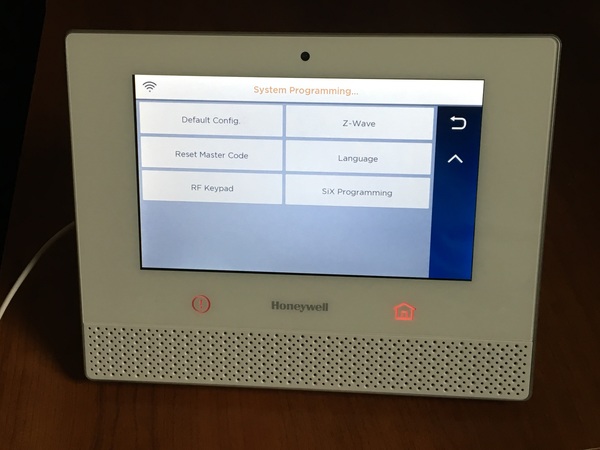
Now, with the new SiX Programming mode (found by pressing the down arrow once you enter programming mode on a Lyric with the MR4 firmware)


(SiX Programming option on second page of Lyric programming)

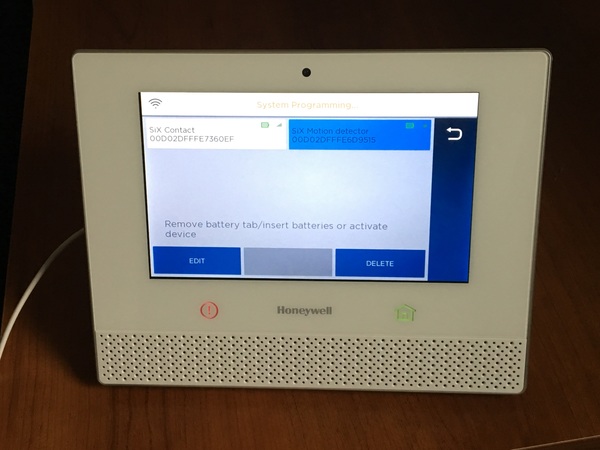
you can simply power on (either pull the battery tab or insert batteries) or activate each SiX sensor you want to learn in to the panel to have them all auto learn to the panel and show a screen with all the new learned in devices


(SiXCT and SiXPIR activated in SiX Programming mode)

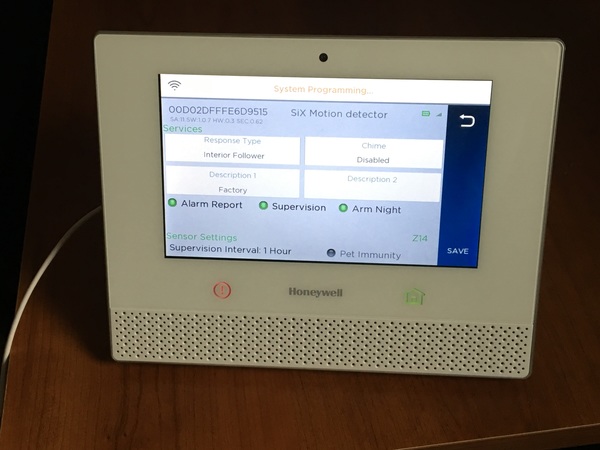
and you can highlight and click Edit right from that screen to bring up a new screen that shows you all of the device settings so you can set all of your new zones and settings much more efficiently.


(SiXPIR and SiXCT edit screens in SiX Programming mode)

The new SiX Programming mode can save you hours depending on how many SiX devices you need to learn to your Lyric. Keep in mind though, just like with the batch enrollment mode, you can't enroll a SiXFOB to your Lyric using SiX Programming. You still need to use the Keys section of the Lyric programming to enroll a SiXFOB.

Easier Instant Arming Mode

For as long as we can remember, Honeywell systems have supported an Instant arming mode which allows a user to arm the system so that the system's alarm activates as soon as a zone is triggered, even if the zone is normally an entry/exit zone. Instant arming is helpful for ramping up the security of your system when you know that no one should be entering the home (at night or when you go on vacation for instance). Instead of an intruder being able to open your main front door without the alarm going off right away, Instant arming ensures that the Lyric goes into full alarm mode as soon as any door or window is opened. As long as you remember to disarm from a key fob or TC2 before an authorized user needs to enter the property, Instant arming is a great way to enhance your protection at key times.

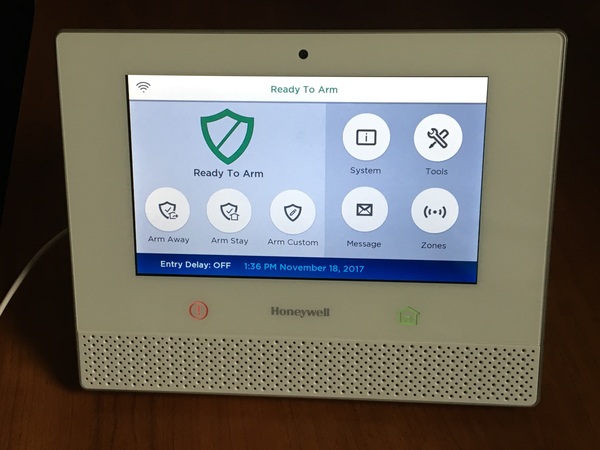
When Honeywell developed the Lyric they didn't provide an Instant button on the Security screen and many users lamented the loss of Instant arming. The Lyric does in fact allow for Instant arming if you use the Arm Custom option which gets you to a screen where you can de-select the Entry Delay and arm the system so that delayed zones activate the alarm as soon as they are violated but it isn't a great user experience. We had a good amount of feedback from users that had upgraded Honeywell systems that supported Instant arming to the Lyric and were disappointed that arming in that way was more difficult on the Lyric. Thankfully, Honeywell has heard our cries and with the MR4 firmware, you'll notice when you hit the Security icon on your Lyric screen there is an Entry Delay: On/Off toggle at the bottom left of the screen.


If you want to arm Instant (motion detector zones turned off but all other zones active with no entry delay even if programmed as an entry/exit zone), simply tap the Entry Delay words until it shows OFF and then tap Arm Stay and enter your code. If you want to arm Maximum (all zones active with no entry delay even if programmed as an entry/exit zone), simply tap Arm Away with the Entry Delay set to OFF and then tap Arm Away and enter your code.

Skybell Doorbell Chime

You may have noticed if you press Tools and enter your Master Code and then the right arrow, there's a Skybell Setup button. If you did, you probably have wondered why pressing it does nothing. For some reason Honeywell released the Skybell Setup button on a previous Lyric firmware but didn't add the true functionality of the button until the new MR4 firmware. You could still pair a Skybell with a Total Connect 2.0 account but the Skybell wouldn't integrate with the actual Lyric system at all.

Now, pressing the Skybell Setup button allows you to integrate your doorbell camera (the round Skybell HD and Skybell Slim HD) to the Lyric Controller so that if someone presses your Skybell's doorbell, the Lyric sounds one of it's unique Chime tones. You can choose which Chime sound you want during the Skybell Setup process.

Smoke Maintenance Signaling

With MR4 firmware, the Lyric can now trigger a maintenance trouble signal if a connected SiXSMOKE detects that it's sensing chamber has too much dust or dirt for the detector to function properly. Similar to programming a loop 2 maintenance trouble zone for a 5808W3 smoke detector, you'll now know in advance if any of your connected Honeywell smoke detectors need cleaning.

Support of Yale Assure Locks

The Lyric's Automation controller provides support of Z-Wave locks so that you can program the system to auto-arm when you lock your door or auto-disarm your system when you unlock your door. If you have Total Connect 2.0 you can even remotely lock/unlock your doors. We recommend Yale, Kwikset and Schlage locks when connecting Z-Wave locks to your Lyric and with the MR4, the Lyric now officially supports Yale's range of Real Living Assure Locks, the YRD216, YRD226 and the key-free YRD246. We'll have these new Yale Z-Wave locks up on our site in the Home Automation section soon.

Fixed Lyric Keypad Bug

Sometime prior to MR4, we found that if you had an LKP500 Lyric keypad connected to your Lyric system and you had the Lyric's Voice setting disabled, the Lyric keypad would not provide the expected entry tones (beeps when you violate an entry/exit zone warning you that you need to disarm the system to avoid an alarm activation) even if the Entry Tone feature was enabled in the keypad settings.

Once your Lyric is on the MR4 firmware, if you like your system's Voice setting disabled, because you don't want to hear the main panel's voice announcements, you'll still be able to have your auxiliary keypads beep at you to warn you that you must disarm your system when coming home. As it's easy to forget your system was armed if your keypad doesn't beep at you, this is a critical fix for any Lyric user that prefers not to have the Voice setting enabled.

Fixed Lyric Thermostat Bug

We had a customer that noticed that once he connected his Lyric thermostat to his Lyric system, the Lyric was excessively pinging out to the Honeywell servers. We reported the strange IP behavior to Honeywell's engineers and after some testing they were able to replicate the issue and assured us that a fix would be coming. Our customer decided to remove the Lyric thermostat integration from his system for the time being.

Once MR4 was released, we had our user test the Lyric thermostat integration to his Lyric system and this time there was no unusual pings from the panel on his network so we are confident that this Lyric bug has been squashed.

Dealer Branding

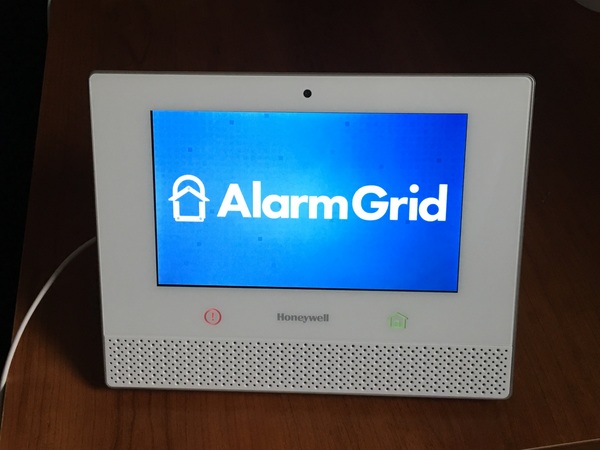
The last change that MR4 firmware brings to the Lyric system is the new dealer branding feature. With this new feature, a Honeywell Lyric dealer's company splash page will show as one the Lyric slideshow images as long as the feature is enabled. Any Alarm Grid monitored client will see this image scroll through on their slide show:


In addition to the slide show page, the dealer branding also shows up as a small company logo on the bottom left of the Lyric home screen that you can click to get to a contact information page in case you need to get in touch with us for support.

If you have any questions about this feature of any of the new features and updates and fixes that the latest Lyric firmware brings to Honeywell's aware winning system, please let us know in the comments below or email us at support@alarmgrid.com.

Tags: , , , , , , , , ,

Comments