Press Releases Posts

Posted By

The First Alert VISTAH3 is Resideo's premiere hybrid panel. It offers built-in wired zones and a built-in PROSIX receiver. With an added module, it can support legacy RF from various manufacturers. However, a touchscreen keypad must be added for local programming, and WIFI isn't included.

The VISTAH3 supports up to 96 zones total, with up to four (4) partitions. There are eight (8) built in hardwired zones, expandable up to a total of 64 hardwired zones. The panel has an RJ45 connector built-in for hardwired Ethernet. If a hardwired network connection isn't possible, the panel can support WIFI with the addition of a module.

The VISTAH3 supports the following agency listings (in no particular order):

  • UL 985 - Household Fire
  • UL 1023 - Household Burg
  • UL 2610 - Commercial Burg
  • UL 1637 - Home Healthcare Signaling Equipment
  • UL 2017 - Safety General Purpose Signaling Devices
  • ULC S545 - Residential Fire Warning System Control Units (Canada)
  • ULC S304 - Standard for Control Units, Accessories and Receiving Equipment for Intrusion Alarm Systems (Canada)
  • ANSI/SIA CP-01 - False Alarm Reduction Standard

Once the VISTAH3 is registered with AlarmNet it can be used with Total Connect 2.0. This allows the end-user to monitor their system remotely, check system status, arm and disarm from nearly any location, control home automation devices that are associated with the account and view video, if included in the monitoring plan.

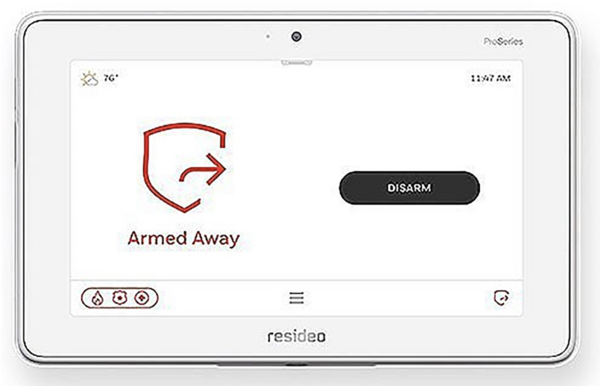
Like the Honeywell Home PROA7 and PROA7PLUS and the Resideo PROA7C and PROA7PLUSC the First Alert VISTAH3 can be programmed remotely through AlarmNet360 or locally through a touchscreen keypad. Unlike the PRO Series panels though, the VISTAH3 doesn't come with a touchscreen interface from the factory.

To add a touchscreen to the VISTAH3, you must also add WIFI capability. This can be done by adding either the PROWIFI (WIFI only) or the PROWIFIZW (WIFI and Z-Wave Plus). Once the panel has access to WIFI the Honeywell Home PROWLTOUCH, Resideo PROWLTOUCHC, or the First Alert VISTAHTCHWLC can be added.

Up to eight (8) touchscreen keypads are supported per VISTAH3 panel. You can read all about the number and types of supported keypads in this helpful FAQ. In the table below, we have a list of all the VISTAH3 associated products with links to each.

In addition to the individual components listed in the table, we provide a list of curated kits below. These kits make it easy for DIY customers to get all necessary items to program their system upon arrival. Click any link in the table for additional information on individual products, including specifications and documentation on the dedicated product pages.

First Alert VISTAH3 and Associated Products:

Product Image Description
First Alert VISTAH3 Hybrid alarm panel with eight (8) hardwired zones and PROSIX wireless capability built in.
Honeywell Home PROWIFI WIFI-only Module
Honeywell Home PROWIFIZW WIFI + Z-Wave Plus Module
First Alert VISTAHTCHWLC WIFI Touchscreen Keypad
Honeywell Home PROWLTOUCH WIFI Touchscreen Keypad
Honeywell Home PROLTE-A AT&T LTE
Cellular Module
Honeywell Home PROLTE-V2 Verizon LTE
Cellular Module
Resideo PROWLTOUCHC WIFI Touchscreen Keypad
First Alert VISTAHTKVRWL Legacy Wireless Takeover Module
First Alert VISTAHEXPHW Hardwired Expander
First Alert
VISTAHISO

iBus Isolator Module
(Isolates burg from fire
devices on the iBus.
Only required in commercial
fire applications.)
First Alert VISTAHRELAY iBus Relay Module
First Alert VISTAHTKVR-B iBus to ECP Expansion Converter
First Alert VISTAHTKVR-V iBus to V-PLEX Expansion Converter
First Alert VISTAHPKP iBus portrait-style
wired push-button keypad
First Alert VISTAHLKP iBus landscape-style
wired push-button keypad

First Alert VISTAH3 Kits Available from Alarm Grid:

  • First Alert VISTAH3PK:
    • 1 - First Alert VISTAH3 Hybrid Panel
    • 1 - Honeywell Home PROWIFI (WIFI-only) Module
    • 1 - First Alert VISTAHTCHWLC WIFI Keypad
  • First Alert VISTAH3PK-V:
    • 1 - First Alert VISTAH3 Hybrid Panel
    • 1 - Honeywell Home PROWIFI (WIFI-only) Module
    • 1 - Honeywell Home PROLTE-V2 Verizon LTE Module
    • 1 - First Alert VISTAHTCHWLC WIFI Keypad
  • First Alert VISTAH3PK-A:
    • 1 - First Alert VISTAH3 Hybrid Panel
    • 1 - Honeywell Home PROWIFI (WIFI-only) Module
    • 1 - Honeywell Home PROLTE-A AT&T LTE Module
    • 1 - First Alert VISTAHTCHWLC WIFI Keypad
  • First Alert VISTAH3PK-TCH:
    • 1 - First Alert VISTAH3 Hybrid Panel
    • 1 - Honeywell Home PROWIFIZW (WIFI & Z-Wave Plus) Module
    • 1 - First Alert VISTAHTCHWLC WIFI Keypad
  • First Alert VISTAH3PK-TCH-V:
    • 1 - First Alert VISTAH3 Hybrid Panel
    • 1 - Honeywell Home PROWIFIZW (WIFI & Z-Wave Plus) Module
    • 1 - First Alert VISTAHTCHWLC WIFI Keypad
    • 1 - Honeywell Home PROLTE-V2 Verizon LTE Module
  • First Alert VISTAH3PK-TCH-A:
    • 1 - First Alert VISTAH3 Hybrid Panel
    • 1 - Honeywell Home PROWIFIZW (WIFI & Z-Wave Plus) Module
    • 1 - First Alert VISTAHTCHWLC WIFI Keypad
    • 1 - Honeywell Home PROLTE-A AT&T LTE Module
  • VISTAH3IND1***:

***Note: The last kit listed above (VISTAH3IND1) does not contain the required equipment for programming the VISTAH3. To program, you will need to add a WIFI-capable module and a touchscreen keypad from the list of individual products in the preceding table.

Tags: , , , , , , , , , , , , , , , , , , , , , , , , , , ,

Comments


Posted By

Up to now, Alarm Grid has never enabled Pro Video with Analytics on Alarm.com video accounts unless specifically requested by the customer. This feature comes with additional costs that we have always covered. Now that Video Motion Detection is no longer an option, we've changed our policy.

Although Alarm.com ended support for enabling Video Motion Detection on new accounts in February 2023, its effect on our video customers only became clear to us recently. One of our customers alerted us to an issue that highlighted the impact of this change, prompting us to institute this new policy.

Please note that this policy change does not affect the monthly monitoring price for Platinum (Self or Full) Monitoring or Standalone Video Monitoring. This adjustment is simply to ensure our customers receive the full monitoring experience they expect. Below, we'll discuss the differences between Video Motion Detection and Video Analytics.

Video Motion Detection (VMD)

Method of Detection: VMD detects motion by analyzing brightness and color changes in user-defined pixel areas within camera images, eliminating the need for a separate motion detector.

Configuration: VMD settings are configured using VMD windows, which are drawn by the user on a live video preview. Users can adjust the sensitivity (how much change is needed to trigger an event) and target size (the percentage of the VMD window that needs to be filled by movement) for each window.

Recording Rules: VMD recording rules can be created to trigger recordings when motion is detected in specified VMD windows. However, for some camera series, the option to choose specific VMD windows to trigger a recording is not available; any motion in any window will trigger a recording.

Best Practices: For effective detection, it's recommended to draw longer and narrower boxes, similar to tripwires, in areas where motion should trigger a recording. Avoid placing windows in areas with constant or insignificant motion like moving trees or reflective surfaces. VMD windows should not overlap, as this can lead to false activations. For outdoor cameras, creating lines or barriers with the available windows is suggested instead of one large box.

Limitations:

  • VMD may not always function properly due to environmental factors like flying insects, falling leaves, or precipitation.
  • Certain older camera models do not show the VMD window turning orange upon motion detection during configuration.
  • The VMD windows for certain cameras are not visible to your alarm dealer (for troubleshooting purposes) in the Partner Portal, even after they've been configured.
  • Sensitivity settings may affect all VMD windows for some camera models.

New accounts created after February 2023 will no longer have the option to create VMD recording rules, as Alarm.com is moving forward with Video Analytics as their primary motion-activated recording solution. However, accounts created before this date, and older cameras that only support VMD will continue to be able to use VMD, and support for it will continue.

Video Analytics

Method of Detection: Video Analytics continuously scans a property and identifies and classifies objects such as people, vehicles, or animals. It can understand traffic patterns and detect specific behaviors like loitering, or objects crossing virtual lines.

Configuration: Video Analytics rules are configured using virtual tripwires (to capture movement through an area) or ground zones (to capture objects lingering in an area). Users can define the area of interest and specify the duration an object needs to be in a ground zone to trigger a recording.

Recording Rules: Video Analytics rules offer more advanced options, including the ability to trigger recordings based on the type of object (person, vehicle, animal) detected. Existing VMD recording rules must be deleted before setting up a Video Analytics rule. Users can create up to three Video Analytics rules per camera, and ground zones and tripwires can overlap.

Best Practices:

  • For accuracy, avoid drawing tripwires or ground zones over objects that move on their own (like trees or shrubs) and only draw the rule where the feet or wheels of the object should cross.
  • It's recommended to observe the rule's detections and then adjust the Minimum Object Detection Size or recalibrate the camera if needed.
  • Proper camera placement (height, angle, distance) is crucial for Video Analytics to function effectively.

Additional Features: Video Analytics enables enhanced notifications with thumbnail images of the detected objects. It can also be used to control lights based on detected events. Features like Perimeter Guard™ (alert sounds and flashing LED) and Package Alerts for specific doorbells rely on Video Analytics.

Additional Content on Video Analytics:

Summary of Key Differences:

Detection Method: VMD detects motion based on pixel changes within a specified area of the camera's field of view, while Video Analytics constantly scans the camera's view, identifying and classifying objects using cutting-edge technology and machine learning.

Precision: Video Analytics offers more precise detection and reduces false triggers by accurately identifying specific types of objects.

Rule Capabilities: Video Analytics allows for more sophisticated rules based on object type and behavior (e.g., loitering, crossing a line), unlike VMD which primarily reacts to general motion within a defined area.

Notifications: Video Analytics provides more comprehensive notifications with thumbnail images and object classification.

Summary:

In essence, Video Analytics is a more advanced and intelligent method of motion detection when compared to VMD. While VMD can be effective for basic motion detection on older systems, Video Analytics offers greater accuracy, more options, and better control over what triggers recordings and notifications.

Compatible Cameras:

Cameras That Support VMD Only:

If you are moving into a home or business with existing cameras and plan to activate new Alarm.com service after February 2023, please note that the following cameras support only Video Motion Detection (VMD), not Video Analytics. With these specific models and possibly other older cameras not shown here, you will only be able to view live video remotely; creating recording rules is not possible.

Camera Name Image
ADC-VS1
Analog to IP Converter
1-Channel
ADC-VS420
Analog to IP Converter
4-Channel
ADC-V510
Fixed Lens
Indoor Camera
ADC-VS520IR
Fixed Lens
Indoor Camera w/IR
ADC-V610PT
Indoor Pan/Tilt Camera
ADC-V620PT
Indoor Pan-Tilt
Camera
ADC-V700X
Weatherproof
Day/Night IP Camera
ADC-V720
Outdoor PoE
Night Vision
Bullet Camera


ADC-V820
Indoor PoE
Dome Camera
ADC-V521IR
Indoor Fixed
IR Camera
ADC-V721W
Wireless Outdoor
IP Night Vision Camera
ADC-V821
Outdoor PoE
Night Vision
Dome Camera
2GIG HD100
Indoor 720P
Camera w/ Night Vision

Cameras That Support Video Analytics:

See the table below for cameras compatible with Alarm.com's advanced Video Analytics. Given its superior accuracy for detecting threats and gathering information about your property compared to Video Motion Detection, we strongly recommend upgrading if your cameras currently only support VMD. Start planning your upgrade today, you'll be glad you did!

Camera Name Image
ADC-V515
Indoor 1080P
Camera
ADC-V522IR
Indoor 1080P
Night Vision Camera
ADC-V523/ADC-V523X
Indoor 1080P Camera
with IR Night Vision
ADC-V622
Indoor 1080P Camera
with IR Night Vision and
2-Way Audio
ADC-V722W
Outdoor 1080P
WIFI Camera with
Night Vision
ADC-V723/ADC-V723X
Outdoor 1080P Camera
with IR Night Vision and
High Dynamic Range (HDR)
ADC-V724/ADC-V724X
Outdoor 1080P WIFI Camera
with 2-Way Audio
ADC-VC726
Outdoor 1080P
PoE-Capable
Mini Bullet Camera
with Night Vision
ADC-VC727P
Indoor/Outdoor 1080P
PoE-Capable Mini Bullet
Camera
ADC-VC728PF
Indoor/Outdoor 1080P
Varifocal Bullet Camera
ADC-V729 / ADC-V729AC / ADC-VC729P
Outdoor 4MP Floodlight Camera
ADC-V729 - Powered by 24V DC
ADC-V729AC - Powered by 100V - 240V AC
ADC-VC729P - PoE-Capable or 24V DC Powered
ADC-VC736
Outdoor 1080P Large Bullet
PoE-Capable Camera
with Night Vision
ADC-VC826
ADC-VC827P
Indoor/Outdoor 1080P
Dome Camera
ADC-VC836
Outdoor 1080P
Turret Camera with
Night Vision
ADC-VC838PF
Indoor/Outdoor 1080P
Varifocal PoE-Capable
Turret Camera
ADC-VC847PF
Indoor/Outdoor 1080P
Varifocal PoE-Capable
Dome Camera
ADC-VDB750
Full HD Wired
Video Doorbell Camera
ADC-VDB755P
Full HD PoE-Capable
Video Doorbell Camera
ADC-VDB770
Full HD Wired
Video Doorbell Camera
with High Dynamic Range (HDR)
ADC-VDB780B
Full HD 2MP Battery-Powered
(Rechargeable)
Video Doorbell Camera
Also available in a bundle with the
ADC-W115C Wireless Chime Module.
Some installations will require
the ADC-W115C to use this
video doorbell camera.
If a cameras in the above list has no link it's because it is discontinued and no longer offered by Alarm Grid.
Tags: , , , , , , , , , , , , , , , , , , , , , , , , , , , , , , , ,

Comments


Posted By

Time for the CellBounce to, well, bounce. This device, which served as a temporary bridge for AT&T customers clinging to their 3G communicators, is now being discontinued. For those who rely on CellBounce to convert 3G signals for use on the LTE network, it's time to consider the next steps.


Mark your calendars: as of May 1, 2025, AT&T will officially cease support for CellBounce devices on its network. This means if you're currently relying on a CellBounce to bridge the gap between your old AT&T 3G/4G communicator and the AT&T LTE network, it's time to upgrade.

Failure to upgrade to a new LTE communicator, or a new system before the deadline will likely result in a complete loss of communication, compromising alarm signals. This includes critical life-safety signals like fire and carbon monoxide alerts.

You may be wondering which communicator to choose. Below, we'll give you some suggestions for how best to move past the Resideo CellBounce and that old 3G/4G communicator:

Alarm Panel LTE Communicator Recommended
Replacement
Panel
New Panel
LTE Communicator
L3000 LTE-L3A (AT&T)
LTE-L3V (Verizon)
PROA7PLUSC PROLTE-A (AT&T)
PROLTE-V2 (Verizon)
Lynx Touch
(L7000
L5210
L5000
Panel Firmware
9.00.209+
required)
LTE-L57A (AT&T)
LTE-L57V (Verizon)
PROA7PLUSC PROLTE-A (AT&T)
PROLTE-V2 (Verizon)
VISTA-20P
VISTA-15P
VISTA-10P
LTEM-XA (AT&T)
LTEM-XV (Verizon)
LTEM-PA (IP & AT&T)
LTEM-PV (IP & Verizon)
LTEM-PXA (IP* & AT&T)
LTEM-PXV (IP & Verizon)
LTEM-PIA
(IP & AT&T UL Residential Fire Rated)
LTEM-PIV
(IP & Verizon UL Residential Fire Rated)
VISTAH3 PROLTE-A (AT&T)
PROLTE-V2 (Verizon)
VISTA-21iP LTEM-XA (AT&T)
LTEM-XV (Verizon)
LTEM-PA (IP & AT&T)
LTEM-PV (IP & Verizon)
LTEM-PXA (IP & AT&T)
LTEM-PXV (IP & Verizon)
LTEM-PIA
(IP & AT&T UL Residential Fire Rated)
LTEM-PIV
(IP & Verizon UL Residential Fire Rated)
Must Disable Internal Comm.
VISTAH3

VISTA-21IPLTE
PROLTE-A (AT&T)
PROLTE-V2 (Verizon)

LTE-21V (Verizon)
No AT&T Option Available
for the VISTA-21IPLTE


*The LTEM-PXA and LTEM-PXV are unique in that they can support either a wired Ethernet connection or WIFI. To use WIFI, either the PROWIFI (WIFI Only) or the PROWIFIZW (WIFI and Z-Wave) module must be added.

We realize upgrading to a new panel may be a big undertaking for a DIYer. We've got content on upgrading from a VISTA-20P to a VISTAH3 and on upgrading from several older panels to the PROA7PLUS:

If you fail to replace the Resideo CellBounce before the deadline, here's what you may experience:

  • Communication Failures: "Comm fail," or communication failure, means your alarm system's regular check-in with AlarmNet didn't happen and they sent a message to the monitoring station. These supervision check-ins usually occur daily or monthly. If a comm fail happens, the monitoring station will normally contact the alarm dealer, who will then contact you, though exact procedures may vary. For Alarm Grid customers with cellular communicators, these check-ins are typically set for every day. It is possible that your system is set as "unsupervised". If that is the case, your system might be incapable of communicating and neither you nor the monitoring station would know.
  • Trouble message on display. This issue can vary widely, depending on your panel type and supervision settings. When a cellular communicator is in use, there is a "cell fault time" setting within communicator programming. By default, this is usually set to 60 minutes. With this setting, if the communicator loses contact with the cellular network for 60 consecutive minutes, a trouble message is displayed by the panel. This means you'll likely see that there is a problem before your alarm dealer. This may be displayed as a bF or Check 103 depending on the panel and keypad used. If a CellBounce is the issue, the most effective way to clear this message permanently is to disable the cellular communicator in panel programming. This will effectively disable cellular reporting. A better option is to upgrade the communicator or the system.

If you happen to have an IP and GSM communicator, it is usually possible, depending on your communicator version, to disable only the cellular path for the communicator. This will leave the IP communicator working. This might be a temporary solution, until you can upgrade to a new LTE communicator, or a new system.

The CellBounce was always intended as a short-term fix for a long-term problem. Let's face it, some people just don't like being told they have to upgrade their stuff. I remember when the old 2G network shut down, I had family members who clung to their old phones right up until the bitter end! But eventually, we all have to move with the times. Funny thing is, those same family members wouldn't give up their smartphones without a fight today.

Tags: , , , , , , , , , , , , , , ,

Comments


Posted By

If you must replace a PROA7 or PROA7PLUS* panel, it is important to perform not only the proper steps but in the proper order. Failure to do so may cause some PROSIX sensors to become unresponsive, forcing a replacement of those sensors. In this blog, we'll outline the proper procedure.

As we've often noted, Resideo's SiX Series and PROSIX sensors are uniquely paired to the alarm panel during initial panel and sensor configuration. Once paired, they cannot be used with any other panel until they are properly unpaired from the original. Without this unpairing, a failed original panel can potentially render a sensor unusable.

AlarmNet360 (AN360) acts as an important safeguard. When a PRO Series panel is registered with AN360, it begins near-constant two-way communication. Any programming change at the panel triggers an upload of the panel's configuration to AN360. This creates a backup of the panel's current programming, including the essential configuration information for all PROSIX sensors.

In the event of a PRO Series panel failure, a replacement panel can be configured with the exact same zone and system programming parameters as the original. The sensor information, including wireless channel data and encryption keys, is transferred to the new panel, ensuring it matches the existing sensor programming. By following the proper replacement process, the existing PROSIX sensors function seamlessly, unaware of the panel change.

However, a significant problem arises when DIY users add new PROSIX sensors to the replacement panel before a proper AN360-based panel replacement is performed. We've observed this issue on several occasions. Customers, awaiting a scheduled panel replacement, decide to add new PROSIX sensors in the interim.

Because the panel replacement requires dealer involvement, and in the case of Alarm Grid customers, a scheduled appointment with an Alarm Grid activator, customers often utilize their wait time by tinkering with their system. This can include adding new PROSIX devices.

When the scheduled replacement occurs, customers often overlook the newly added sensors, failing to mention them to the activator. This oversight, due to the unique way PROSIX sensors function, can create a serious conflict.

PROSIX sensors communicate using 2.4 GHz, similar to some WIFI networks. Like WIFI, PROSIX sensors utilize channels within the 2.4 GHz band. If a PRO Series panel detects interference on its current channel, it can instruct all PROSIX sensors to switch to a less congested one. This ensures the most consistent ongoing communication.

During pairing, encryption keys and the designated communication channel are established. All PROSIX devices on a PROA7 or PROA7PLUS panel operate on the same channel. This channel information is regularly backed up to AN360 and transferred to the replacement panel during the swap.

Consequently, AN360 holds a complete backup of the original panel's configuration. However, the new panel now contains configuration information for the recently added sensors, including new encryption keys and a potentially different 2.4 GHz channel.

During the replacement process, the new panel's configuration is overwritten with the backup from the original panel. The information for the newly added PROSIX sensors is lost. Effectively, the new panel becomes the original panel. Unfortunately, the new sensors were paired with the actual new panel, not the restored version.

Consequently, from this point there is no mechanism to instruct the newly added sensors to release or unpair, allowing them to be paired with the restored panel. There is a narrow 24 hour window from the time of enrollment where most PROSIX sensors can be defaulted. If the window for default is missed, and the replacement through AlarmNet360 is completed, the newly added PROSIX sensors become unusable. For that reason, we recommend anyone replacing a PRO Series panel follow these steps.

Recommended Steps, In Order, For Replacing a PROA7 or PROA7PLUS:

  1. Make sure the replacement panel is the same revision, or higher, as the original panel. Work with your alarm dealer to verify the panel versions. It is possible to replace a PROA7 with a PROA7PLUS. It is NOT possible to replace a PROA7PLUS with a PROA7.
    NOTE: Firmware updates require WIFI. If your location doesn't have WIFI you can use a phone as a hotspot. This will be seen as a WIFI connection by the panel and AN360, and should allow you to perform the update. Obviously, this means the panel will need a PROWIFI or PROWIFIZW.
  2. Make sure both panels are powered down.
  3. Your alarm dealer will begin the replacement process in AN360. They will instruct you when to move to the next step.
  4. With both panels still powered down, remove any modules such as PROLTE-A/PROLTE-V2, PROTAKEOVER, PROWIFI/PROWIFIZW from the original panel and install them into the new panel. If you have a PROTAKEOVER, be sure you move the backplate from the old panel to the new panel as well. It contains the antennas for the PROTAKEOVER.
  5. Power up the NEW panel. You can immediately join the WIFI network when prompted, if applicable, or wait for the cellular module to initialize then press NEXT.
  6. Press REGISTER, when prompted. The panel will register then pull all available programming from AN360. When this process is finished, the panel will display the Home screen.
  7. If any PROWLTOUCH or PROWLTOUCHC WIFI keypads are associated with the panel, each will prompt you to "Pair to Panel". Do this at each keypad.
  8. If the original panel was a Version 01 or 02 and there were PROINDMV Motion Viewers associated with it, these will have to be repaired with the new system. Your alarm dealer will give you specific instructions on what to do. The alarm dealer will need to go to each PROINDMV zone within AN360, select EDIT, then select LEARN. At that point they will tell you to activate the Motion Viewer. You can either remove the cover, or remove and replace the batteries. The PROINDMV will then be repaired.
  9. Thoroughly test each component including zones, keypads, keyfobs, communicators, etc. Use the system test mode.
  10. It is now safe to add new PROSIX devices to the panel.
  11. If you're using BlueTooth Disarming, all cell phones will have to be manually paired with the new panel.
  12. If you used Alexa with the original panel, you'll need to set that up manually with the new panel.
  13. All Z-Wave devices that were paired with the original panel will need to be excluded then included with the new panel.
  14. All Total Connect 2.0 scenes will need to be recreated.

Resideo recently announced they would discontinue the Honeywell Home PROA7PLUS and would continue to produce the Resideo PROA7PLUSC. We now use PROA7PLUS and PROA7PLUSC interchangeably.

Tags: , , , , , , , , , , , , , , , ,

Comments


Posted By

We've all been there: you step out the door, and your phone instantly buzzes with camera notifications. If you're using Alarm.com's recording rules, you'll love this update! Now, you can set a delay of from 1 to 30 minutes before those recordings start, cutting down on nuisance notifications.

Alarm.com continues to enhance its user experience with a new recording rule setting that minimizes unnecessary notifications and maximizes video storage. By allowing users to delay recordings during exit, nuisance clips are reduced, freeing up valuable upload capacity within monthly video plan limits and ultimately saving users money.

This new delay feature is compatible with all Alarm.com cameras that support modern video analytics. Older, first-generation analytics cameras, while still functional on some accounts, do not support this feature.

Configuring the recording rule delay is...unique. We've outlined the steps below in an effort to provide clarity. You can apply this setting to both new and existing recording rules. Refer to the screenshots provided for a visual guide on enabling the delay within the rule settings.
To navigate to this section via the customer website:
  1. Log into your Alarm.com account.
  2. Click Video.
  3. Click on Recording Rules (at the top, in the blue bar).
  4. Click +Add New Rule, or find the rule you want to edit in the list, then click the pencil icon.
  5. In the section titled "Recording Rule" fill in the appropriate information. In the section for "Except when.." select "Disarmed", "Armed Stay" or both.
  6. Select the Exit Delay Time from the dropdown.
  7. Be sure to Save before exiting.

Programming the Video Rules Exit Delay via the customer website:


To navigate to this section via the customer app:
  1. Open the Alarm.com app and log in.
  2. Tap Video at the bottom of the screen.
  3. Tap the gear icon at the top right.
  4. Tap Recording Rules.
  5. Tap Add at the upper right, or scroll through the list of recording rules, find the one you want to edit and tap the pencil icon.
  6. Tap Next in the upper right once the first screen is properly configured, then scroll down to the Recording Rule section.
  7. In the "Except when.." section, select "Disarmed", "Armed Stay", or both.
  8. From the dropdown, select the Exit Delay time.
  9. Be sure to click Save before exiting.

Programming the Video Rules Exit Delay via the Alarm.com app:


Actually, the setup itself is not the tricky part. It's understanding what will happen, and when, that's a little confusing. So, here's the logic. This information was provided by Alarm.com Core Technical Support:

  • If you select "Except when Disarmed" and choose a delay from the dropdown, the recording rule will start after the delay time whenever the system is Armed Away or Stay.
  • If you select "Except when Armed Stay" and choose a delay from the dropdown, the recording rule will begin after the delay time when the panel is Disarmed or Armed Away.
  • If both "Except when Disarmed and Armed Stay" boxes are checked and a delay is selected, the recording rule will begin after the delay when the panel is Armed Away.

I'll confess, I haven't quite wrapped my head around this logic. I've found it's best if I don't overthink it! Hopefully, they'll tweak the wording and make it a little more clear somewhere down the road. Regardless, even with a slightly confusing setup, this is a fantastic addition, and I can't wait to try it out on my own system!

Tags: , , , , , , , , , , , , , , , , , , , , , , , , , , ,

Comments


Posted By

For those end-users who desire a more traditional keypad for their First Alert VISTAH3, the First Alert VISTAHLKP wired landscape keypad is now available. Unlike older hybrid systems like the VISTA-20P, though, this keypad will only allow you to control the security system, not program it.


Aside from its traditional appearance, the First Alert VISTAHLKP has another distinct advantage over its wireless touchscreen counterparts. It is a wired keypad, and it connects to the panel using the iBus. The VISTAH3 introduces a new bus technology called iBus that replaces the older Enhanced Console Protocol (ECP) used by the VISTA-20P and other VISTA panels.

This new bus protocol uses RS-485, a frequently used hardware and driver architecture common in industrial automation. This allows for more flexibility in wiring, and longer wire runs for wired bus devices. It is Alarm Grid's belief that every VISTAH3 panel should have at least one (1) wired keypad, for occasions when wireless keypads may not be functioning properly.


  1. 2X16 LCD Display
  2. Power LED
  3. Status LED
  4. Disarm (Off) Key
  5. Arm Maximum (Away, No Entry Delay)
  6. Arm Instant (Stay, No Entry Delay)
  7. Medical Panic
  8. Panic
  9. Fire Panic
  10. Police Panic
  11. Status (scroll)
  12. No Other Function
  13. System Tests
  14. # Key
  15. Quick Arm Night Option
  16. Chime (Toggle)
  17. Quick Arm Home Option
  18. Bypass Sensors
  19. Quick Arm Away Option
  20. Arm Stay
  21. Arm Away
  22. Trouble LED

Using the VISTAHLKP with the VISTAH3 is very similar to using a Honeywell 6160 keypad on a VISTA-20P or similar panel. The following commands can be used:

  • Arm (Away/Stay/Instant/Max/Night)
    • When the system is not ready, quick arming, if enabled, will automatically bypass faulted zones at the end of exit delay.
  • Disarm
  • GOTO (allows the user to log onto a separate partition, if their user code has access)
    • Returns to home partition after 30 seconds of no activity
  • Add/Edit/Delete User Codes
  • Bypass Zones

Excerpt from the User Guide showing Quick Arming icons and corresponding keypad commands:

Each First Alert VISTAHLKP can display either English or French language, depending on the language selection in the VISTAH3 panel. The keypad connects to the panel's iBus terminals as shown:


Wiring Limits for iBus Based on Current Draw and Wire Gauge:
Wire
Gauge
(AWG)
Total Current of All Devices Connected to a Single Wire Run
50mA or Less 100ma 300ma 500ma 600ma
#22 AWG 700' (213m) 350' (107m) 120' (37m) 70' (21m) 60' (19m)
#20 AWG 1200' (366m) 600' (183m) 200' (61m) 120' (37m) 100' (30m)
#18 AWG 1900' (579m) 950' (290m) 320' (98m) 190' (58m) 160' (49m)
#16 AWG 3000' (914m) 1500' (457m) 500' (152m) 300' (91m) 260' (76m)
If a separate power supply is used to power iBus devices, it should have a common negative with the iBus. The iBus terminals are not large, so it may be difficult to use heavier gauge wire with them.

NOTE: With ECP devices, the four wires for the bus are:

  • Negative (-), or Black
  • Positive (+), or Red
  • Data In, or Green
  • Data Out, or White/Yellow

However, the iBus connections are:

  • Negative (-), or Black
  • Positive (+), or Red
  • Data A, or Green
  • Data B, or Yellow/White

On the iBus, Data In is YELLOW, and Data Out is GREEN.

The VISTAHLKP keypad cannot be used to program the VISTAH3 system or to control smart home devices. For these capabilities, you'll need a wireless touchscreen keypad and either a PROWIFI (WIFI-Only) or PROWIFIZW (WIFI and Z-Wave Plus) module installed in the panel.

The compatible touchscreen keypads for the VISTH3 are the Honeywell Home PROWLTOUCH, Resideo PROWLTOUCHC, or First Alert VISTAHTCHWLC. Resideo has been working to dial-in their branding strategy recently, hence the different "brands" for these keypads. But, Honeywell Home, Resideo, and First Alert are all Resideo brands and all have the same robust, quality hardware.

If you choose to use the PROWLTOUCH or PROWLTOUCHC, a firmware update to the keypad is currently required (as of February, 2025) to make the keypad compatible with the VISTAH3. This firmware update can take about 30 minutes to download and install. The panel will be updated first, then the keypad. The panel won't download firmware using cellular data, so be sure the WIFI module is installed.

The primary difference between the PROWLTOUCH-style keypad and the VISTAHTCHWLC is size. The dimensions on the VISTAHTCHWLC are 5.75"L x 7.875"W x 1.0"D while the PROWLTOUCH keypads are 4.76"L x 7.68"W x 0.708"D.

You'll often find keypads near entry doors, bedrooms, kitchens, and common areas – basically, anywhere you need quick access to your security system. The VISTAHLKP is a smart choice for entry and exit doors, letting you arm and disarm the system in seconds. Another bonus? If an intruder triggers the alarm, the keypad's noise can be a good distraction. While they're dealing with that, the VISTAH3 system will be working behind the scenes to notify you and the monitoring service, depending on your monitoring plan.

For a straightforward, dependable security solution, the VISTAHLKP keypad is an excellent choice. Its wired connection to the panel ensures near 100% reliability, eliminating the potential issues associated with wireless keypads. If you're looking for simplicity and peace of mind, the VISTAHLKP delivers. Get yours today!

Tags: , , , , , , , , , ,

Comments


Posted By

Resideo has released several MyWebTech Technical Notifications this week. Technical Notification #119 announces a firmware update for PROSeries panels and PROWLTOUCH touchscreen keypads. Notification #121 addresses a firmware update for some legacy AT&T communicators. No action is required.

Technical Notification #119:

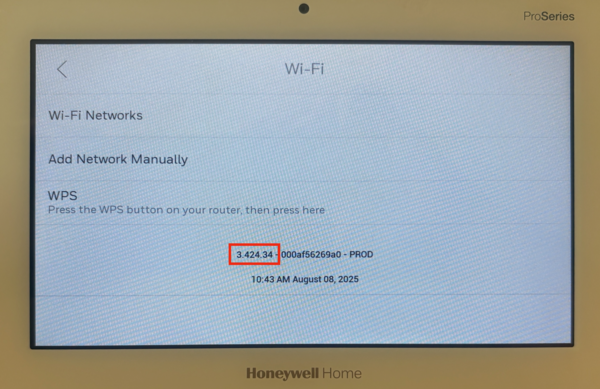
Technical Notification #119 announces a recommended firmware update for all PROA7, PROA7C, PROA7PLUS, PROA7PLUSC, PROWLTOUCH, and PROWLTOUCHC products. The panel firmware will be updated to version 03.2306.55, and the touchscreen keypads will be updated to version 3.424.34. This update improves WIFI connectivity between the panel and keypad.

It's important to remember that these panels cannot perform firmware updates using only an LTE cellular connection. A WIFI connection is required to download and install new firmware. This is why we strongly recommend installing a PROWIFI or PROWIFIZW module and connecting the panel to WIFI. If the panel won't use WIFI and you don't have touchscreen keypads, this update is not necessary.

Resideo is shipping updated units to their distributors. In the meantime, new panels will automatically receive any necessary firmware updates during activation and registration, provided a WIFI communication path is available.

If you have a PROSeries panel or touchscreen keypad, no action is needed. Resideo will automatically push the new firmware to all connected panels with a WIFI connection. The panel or keypad will reboot to install the update, so please be aware of this brief interruption.

In order to receive the firmware update, the product must meet this criteria:
  • Have a WIFI connection.
  • Be in a Disarmed state.
  • AC must be present.
  • Must not be in the process of reporting a signal.
  • Must not be in Walk Test Mode or Programming Mode.

Technical Notification #121:

The products affected by this notification are a little more obscure. The models affected are the LTE-IA, LTE-IC (Canada), LTE-XA, LTE-XC (Canada), LTE-CFA (Commercial Fire), and HWF2A-COM (Commercial Fire, Dialer Capture). Alarm Grid currently does not sell any of these products.

The affected AT&T communicators will receive firmware update 20.00.549.1 and AppZone firmware HW.00.1-25. These updates improve cellular connectivity with the AT&T network.

This firmware addresses minor connectivity issues reported with these units. Resideo will begin pushing the update en masse on the week of February 24, 2025. You can also manually request the update by triggering a test. For the LTE-IA and LTE-XA, briefly pressing and releasing the tamper switch initiates a test. Commercial fire products have a test button near the center of the communicator board.

During and after the update, the communicator may report the following signals:

Contact ID Code Description
E365 Cell Software Update Start
R365 Cell Software Update Finished
E366 Cell Software Update Failed
Tags: , , , , , , , , , , , , ,

Comments


Posted By

Resideo, in a February 17, 2025, announcement, declared the end-of-life (EOL) for its first-generation Total Connect 2.0-compatible cameras. These cameras will no longer function with the TC2 platform after July 31, 2025. Resideo recommends replacing them promptly for uninterrupted service.

The following cameras and accessories are affected by this notice:
Product Name Image
IPCAM-WI
IPCAM-WL
IPCAM-PT
IPCAM-WI2
IPCAM-WO
IPCAM-PT2A
WAP-PLUS
WREX
ACU

The VX Series cameras from Resideo are now available for use with Total Connect 2.0, providing a significant upgrade in performance and features. Improvements include enhanced image resolution and quality, sophisticated AI event detection (allowing for more precise alerts), and integrated two-way audio functionality.

The VX Series doesn't directly replace some older camera equipment. Specifically, it lacks replacements for the first-generation pan-tilt camera, the ACU (analog converter unit), and the WAP-Plus access point. If you need to replace these older devices, Resideo suggests using one or more VX5 indoor cameras in place of the IP-CAM PT/IP-CAM PT2. Cameras currently connected to ACUs should also be replaced with the appropriate VX Series camera.

Recommended VX Series Replacements for Cameras at EOL:
Product Name Recommended
Replacement
IPCAM-WI VX5 Indoor Camera
IPCAM-WI2 VX5 Indoor Camera
IPCAM-WL VX5 Indoor Camera
IPCAM-WO VX3 Outdoor Camera
IPCAM-PT/IPCAM-PT2/PT2A One or More VX5 Indoor Cameras
ACU Replace ACU and Camera with appropriate Indoor or Outdoor VX5 Camera
AP/WAP-PLUS/WREX No Replacement Available

It's true what they say: all good things must come to an end. And while the original Total Connect 2.0 cameras were mediocre by today's standards, they served a vital purpose in a market with few options at the time. They were especially useful for DIYers looking to add integrated video to their alarm systems without a lot of extra complexity.

The VX Series cameras offer the modern features customers expect, integrating seamlessly with Total Connect 2.0, PROSeries panels, and the VISTAH3 (via its touchscreen keypad). For now, Resideo is keeping it simple, offering one (1) indoor camera, one (1) outdoor camera, and one (1) video doorbell option in the VX Series.

Tags: , , , , , , , , , , , , , , , , , , ,

Comments


Posted By

Multiple sources have recently distributed notices regarding the Rogers 3G network. Rogers plans to sunset the 3G network on July 31, 2025. This differs from the original planned sunset on March 31, 2025. Once the network has been shut down, Rogers 3G communicators will soon begin to fail.

AT&T and Verizon ended their 3G service in 2022, but Canadian customers have had a few extra years to upgrade their devices. Now, Rogers is focusing on improving its faster LTE and 5G networks and needs to shut down the older 3G equipment.

If your system uses a Rogers 3G cellular communicator, you'll need to update it soon. Without an upgrade, eventually your system will not send alarm signals, including life-safety signals like fire and carbon monoxide alarms. This will also cause the system to display error messages.

Alarm Grid is here to help our Canadian customers upgrade their alarm systems before the Rogers 3G network shutdown. We'll be contacting you to discuss your upgrade options. Depending on your system, you may need a full upgrade or just a communicator upgrade. We'll work with you to find the best solution.

If you're not an Alarm Grid customer, we still offer a wide variety of FAQs geared toward upgrading systems and communicators. if you go to alarmgrid.com you'll find a list of these FAQs. You can also use the search bar at the top of the page to perform your own search with more specific criteria.

If you have an alarm system that is currently not monitored, or if you're not satisfied with your current service, Alarm Grid offers low-cost, no-contract monitoring plans for most systems. If you're interested in signing up for monitoring, but you're unsure whether we can monitor your system, reach out to support@alarmgrid.com.

Let us know what system you have, and if you're not sure, send us a picture of the system. From there, we may ask for more information. Once we know your system type, and whether we can access the required programming, we'll let you know if we can monitor your system. From there, you can sign up for monitoring.

If you sign up for a Self-Monitoring Plan, once the system or communicator has been upgraded and the required information has been provided, we'll create your account and email you with the login information.

If you sign up for a Full-Monitoring Plan you'll set an appointment for activation. You'll need to install the new communicator or system prior to your activation appointment. If you need support during that time, you can call us at 888-818-7728 (M - F, 9:00 am - 8:00 pm EDT). You can also email us for support, or use our chat support feature during regular business hours.

We'll give you the knowledge you need to replace any equipment necessary. You can purchase that equipment from Alarm Grid or, if you prefer, from other suppliers. Once your system is registered, we'll perform any required testing, discuss any monitoring details for Full-Monitoring Plans, then wrap things up.

Tags: , , , , , , , , , , , , , ,

Comments


Posted By

Resideo and Honeywell Home unveil a new wall mount and charging station for PROWLTOUCH and VISTAHTCHWLC keypads. Redesigned with a 9VDC transformer, the PROWLTOUCHWA allows longer wire runs between the power outlet and the unit and offers improved stability while using wall-mounted keypads.


The original wall mount for PROWLTOUCH and PROWLTOUCHC keypads, the PROWLTOUCHWM, utilized a 5VDC power supply. This lower voltage restricted power wiring to a maximum of 34 feet (10.3 meters) when using 18 AWG wire. This limitation rendered the PROWLTOUCHWM unsuitable for some applications. Furthermore, when the touchscreen keypad was mounted on the PROWLTOUCHWM and used for system control, the keypad exhibited instability and a tendency to move.

With its 9VDC power supply, the PROWLTOUCHWA supports wire runs that are up to 277' (84m) long. That's more than 500% longer than with the PROWLTOUCHWM! The redesign also improves the stability of the keypad while it is mounted. So, no more "Galloping Gertie" while you try to control your system.

Wire Gauge and Length Chart For PROWLTOUCHWA

Wire Gauge
Max Length
Increase over PROWLTOUCHWM
#16 AWG 277 Feet (84m) N/A
#18 AWG 174 Feet (53m) 140 Feet (511%)
#20 AWG 110 Feet (33m) 89 Feet (524%)
#22 AWG 68 Feet (20m) 55 Feet (523%)
2 - #22 AWG
(Twisted Together)
136 Feet (41m) N/A

The PROWLTOUCHWA and PROWLTOUCHWM use different power supplies (9VDC and 5VDC, respectively). These power supplies are not interchangeable*. Using the 9VDC power supply with the PROWLTOUCHWM could damage the touchscreen keypad during charging. This is due to the incompatibility of the PROWLTOUCHWM's internal circuitry with the higher voltage.

*Per Resideo, there will be a very limited number of PROWLTOUCHWM units that can work with the 9VDC power supply. These units will have a date code on the product, which signifies their ability to support the higher input voltage.

Both the Honeywell Home PROWLTOUCHWA wall mount and the Honeywell Home PROWLTOUCHDM desk mount provide the convenience of a fixed keypad location with integrated battery charging. However, these mounts also offer the flexibility to detach the keypad for portable use. This is especially helpful during tasks like adding zones or programming Z-Wave devices, which often require direct interaction with the device being configured.

Due to the design modifications required for enhanced stability of the keypad when mounted, the PROWLTOUCHWA is no longer compatible with installation using a standard gang box. This is a minor inconvenience when compared with significant gains in stability and overall performance.


Alarm Grid has discontinued the original PROWLTOUCHWM and is now pleased to offer the enhanced PROWLTOUCHWA. If you haven't explored wall or desk mounting options for your touchscreen keypad, it is an add-on that we can wholeheartedly recommend. The ability to detach the keypad for mobile use during programming is game changing. Whether you have a new VISTAH3, a PROA7, or a PROA7PLUS system with an add-on touchscreen, this is a product that will quickly prove its worth.

Tags: , , , , , , , , , , , , , , , , ,

Comments