Home Security Blog

Posted By

A small town in Texas may become the latest location to begin enforcing alarm system permits. Buda, TX, located south of Austin, TX, is considering a new ordinance that would require local residents and business owners to pay for permits to operate monitored security systems in city limits.

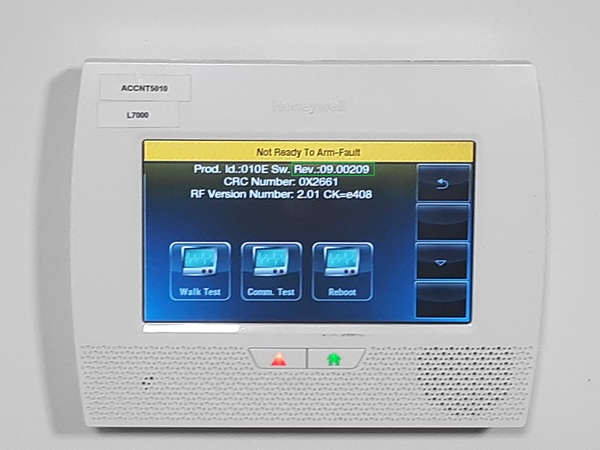
Honeywell lyricpk lte a wireless security system w slash at and

The proposed ordinance includes fees for applying for alarm permits, as well as listed penalties for causing false alarms and/or operating a system without a permit. According to the proposal, a residential alarm permit would cost $25, while a commercial alarm permit would cost $50. Government and educational locations would be exempt from these fees. Similar alarm system policies currently exist in nearby San Marcos, TX and Kyle, TX.

The false alarm penalties mandated by the proposed ordinance are rather relaxed. The first three (3) false alarms within a 12-month period would result in warnings, provided that the user has a system permit. The fourth and fifth false alarms for a registered system within a 12-month period would each result in a $50 fine. The sixth and seventh false alarms for a registered system within a 12-month period would each result in a $75 fine. Any eighth alarm and beyond for a registered system within a 12-month period would result in a $100 fine. And any alarm from an unregistered system would result in a $250 fine.

The ordinance also lists some exemptions for fines and fees:

  • The false alarm was an "act of God".
  • The false alarm was the result of the telephone (POTS) company.
  • The false alarm was caused by a power outage of longer than four (4) hours.
  • An alarm dispatch was not the result of a false alarm.
  • The law enforcement response did not occur within thirty (30) minutes of the dispatch request.

Alarm Grid understands the need for certain jurisdictions to mandate and enforce security system permits. Preventing false alarms and preserving the resources of local emergency services is something we take very seriously. But it is also important to consider that these permits and mandates can make it harder for users to protect their homes and businesses. We ultimately hope that Buda, TX does not decide to pass this ordinance, but we will lawfully comply with whatever decision is made.

When you sign-up for monitoring service with Alarm Grid, we always make sure to check for such policies in your the local area where the system will be used. We want all of our customers to use their systems legally and within the guidelines of any mandates set within the confines of their local jurisdictions. We also work to empower our customers and help them understand their systems so that they can prevent false alarms. Alarm Grid customers are also encouraged to check out this guide on false alarm prevention.

For more information about signing-up for monitoring service and false alarm prevention, please email us at support@alarmgrid.com. We check our email from 9am to 8pm ET M-F. We look forward to hearing from you!

Tags: , ,

Comments


Posted By

The jurisdiction of Sandy Springs, GA will continue imposing monetary fines against monitoring providers for false alarms that occur on the properties they service. The controversial decision to uphold the prior ruling was recently made by the US Court of Appeals for the Eleventh Circuit.

According to the court, false alarm fines imposed by the jurisdiction of Sandy Springs, GA against monitoring providers are justified. The decision to uphold the prior ruling was based on the grounds of preventing false alarms and reducing the waste of city resources. Sandy Springs, GA will continue to maintain its existing ordinance of escalating false alarm fines.

Based upon the current ordinance, the following false alarm fines in Sandy Springs, GA are enforced by the jurisdiction:

  • $25 for the 1st False Alarm
  • $250 for the 2nd and 3rd False Alarms
  • $500 for the 4th and Every Subsequent False Alarm

These fines are to be imposed against monitoring service providers, not actual end users. In addition, the public safety departments for Sandy Springs, GA will not respond to any alarm from a property that has had its fourth (4th) false alarm event within a two (2) year period. This no response period will last for one year after 4th false alarm event in the 2 year period.

Imposing fines for false alarms from security systems is nothing new. However, charging the monitoring company for a false alarm is rather unusual. Last year, the state of Tennessee outlawed fines against security companies for false alarms. The signed bill in Tennessee only allows actual end users to be charged for excessive false alarms, not monitoring providers.

At Alarm Grid, false alarm prevention is something we take very seriously. We strive to provide our customers with all the tools and resources they need to prevent false alarms. Some of the practices designed to prevent false alarms include setting appropriate Entry and Exit Delay periods, using panel Arm-Confirm features, and enabling Alarm Report Delay if needed. Alarm Grid also supports various security panels that meet the standards mandated by CO-01 of the Security Industry Association (SIA) for false alarm prevention.

However, charging monitoring providers fees for false alarms only makes it more difficult for companies like us to do business. We do our part to empower customers and help them fully understand their system so that they can prevent false alarms on their own. From there, it's up to the end user to implement these advised best practices so that false alarms can be avoided. Ultimately, rulings like this can punish Alarm Grid for mistakes that are not our own.

Alarm Grid believes that preventing false alarms and unnecessary emergency dispatch is the shared responsibility of both the monitoring provider and the end user. The last thing we want is to waste the time and resources of local police departments. Our technicians are trained to set up systems so that false alarms are kept to an absolute minimum. And we are more than happy to provide assistance to any monitored customer in false alarm prevention.

Preventing false alarms entirely is the best solution for everyone involved. It prevents local authorities from wasting time and resources. And it prevents Alarm Grid and end users from receiving unwanted fines and penalties. We understand that mistakes are occasionally made. But it is our goal to minimize any false alarms. As a home and/or business owner using an alarm system, that should be your goal as well. It takes a committed effort from all parties.

But strict false alarm policies like those enforced by Sandy Springs, GA do not help in the matter. The vast majority of end users are not looking to cause false alarms or intentionally create inconvenience for their local authorities. Almost every false alarm or unnecessary dispatch is an innocent mistake that can be prevented with more careful planning and better attention to detail. Punishing alarm providers like us is an ineffective solution to the issue.

If you have central station monitoring service through Alarm Grid, then we invite you to reach out to us for false alarm prevention tips to prevent unwanted fines and wasted resources. You can also view this guide on false alarm prevention. We have many tips to share, so please reach out to us by emailing support@alarmgrid.com. We check our email from 9am to 8pm ET M-F. We look forward to hearing from you!

Tags: , ,

Comments


Posted By

It's Monday again, and this is normally when we would be present you with a video recap. But since we're still working on getting our entire video team together, we figured this was a good time to catch up on some videos we missed in previous recaps, as well as present some classic videos.


How Do I Clear a Latched Alarm Using a Tuxedo Touch Keypad?

I show you how to clear a latched alarm on a Honeywell Tuxedo Touch Keypad. This is done by performing a typical disarm and then clearing the faulted zone. The reason why alarms become latched or stuck is because of the alarm memory feature on the Honeywell VISTA Systems. The panel wants to be sure that you are aware that an alarm previously occurred, so it makes you clear the faulted zone, even after disarming at the keypad.


Programming a Zone to a 2GIG GC3e

I show you how to program a wireless sensor to a 2GIG GC3e Security System. This is a very important step when setting up a security system. Every sensor used with the system will require at least one zone on the system. When you program the zone, you will set various options and configurations that will determine how the system responds when the associated sensor is faulted. You will also enroll the Serial Number with the GC3e so that the panel can recognize the sensor.


Honeywell 5808W3: Program Low-Temp to Lyric

Alarm Grid Co-Founder Sterling shows you how to program the low-temperature detection function for a Honeywell 5808W3 Smoke Detector to a Honeywell Lyric Alarm System. The Honeywell 5808W3 is a smoke and heat detector that also offers low-temperature detection, which is commonly referred to as freeze detection. The 5808W3 uses Loop Number 3 for low-temperature detection, and it activates a temperatures below 41°F. This is good for letting the user know before the pipes potentially freeze.


Lyric Security System: Change Master Code

Sterling shows you how to change the Master Code on a Honeywell Lyric Security System. The Master Code is used primarily for arming and disarming the system and accessing the Master Tools Menu. It can be used to adjust or change a limited selection of system settings. However, changing most advanced settings and making zone changes will require the Installer Code. We strongly recommend changing the Master Code from its default of 1234 for security purposes. But we advise leaving the Installer Code at its default of 4112.

Tags: , , , , , , , , , ,

Comments


Posted By

We recently checked out a post from Alarms.org highlighting crime reporting statistics from the FBI in 2015. We know this data is a bit old, but it offers some interesting insights on how crime rates are trending in the United States. Property crime is dropping, but there is still danger.

Honeywell lyric controller encrypted wireless security system

Between 2011 and 2015, property crime in the United States dropped by 14.4%. The decline has been even further since 2006, as US property crime has dropped by 25.7% between then and 2015. Burglary rates have also declined from 701 reported burglaries in 2011 to 542 reported burglaries in 2015. It's also worth noting that every recorded US region in the study (Northeast, Midwest, South, West) experienced a decline in reported burglaries.

But despite these favorable statistics, burglaries are still an unfortunate reality for thousands of people every single year. Approximately 2.5 million reported burglaries occurred in 2015. This equates to roughly one burglary every 13 seconds. Of reported burglaries in 2015, only about 13% of the cases were solved. Meanwhile, the other 87% were left unsolved, typically due to the lack of a witness or identifying evidence. Overall, property crimes in 2015 resulted in approximately $14.3 billion in damages.

As for when burglaries occur, you may be surprised to learn that they are 6% more likely to occur during the day (between 6am and 6pm) than at night. This is makes sense, as burglars tend to feel more confident in breaking into homes when nobody is present. And since most people work during the day, logically, burglaries often occur during these times. It's also not too surprising to learn that most burglaries occur in the summer when it isn't cold outside.

The best way to prevent a burglary is to own a security system. A home without a security system is about 300% more likely to be burglarized than an unmonitored home. And it shouldn't come as a surprise that 72.4% of burglaries in the United States occur when nobody is inside the home. You will certainly want an alarm system in place to keep your home monitored and protected while you are away.

If you are interested in getting a security system and monitoring service for your home, then please reach out to Alarm Grid for more information. We offer effective and affordable monitoring plans for all budgets. The easiest way to contact us is to email support@alarmgrid.com. You should respect a timely response during our usual business hours of 9am to 8pm ET M-F. We look forward to hearing from you!
Tags:

Comments


Posted

Alarm Grid customers who receive central station service through CMS can now follow a new process for setting up an account with MyAlarms.com. This process is more streamlined, and it makes it much easier and more convenient to get started. Now is a great time to build a MyAlarms.com account!


If you are not familiar with MyAlarms.com, it is a service platform available for those receiving central station service through Criticom Monitoring Services (CMS). Criticom is the official central station partner of Alarm Grid. All of our customers who receive central station monitoring service for homes and/or businesses in the United States are protected by CMS.

By using MyAlarms.com, you can access your personal account to put your system on test mode, view your account information, and access your signal history, all without having to call CMS. This is extremely convenient, and it helps CMS to keep their lines free for real emergencies that require immediate attention. We very strongly recommend using this complementary service if you receive central station service through Criticom.

To get started with MyAlarms.com, the first thing to do is visit the MyAlarms.com website and click on the "Create New User" button at the bottom. Next, you will need to provide both your CS#, which is your unique number associated with your CMS account, as well as your false alarm passcode. Remember that your false alarm passcode is the secret verbal code you use to tell a central station operator that everything is alright in the event that they call you.

If you need to obtain your CS#, then you should call Alarm Grid at (888) 818-7728 and choose option [9] to be automatically re-routed to CMS. From there, CMS will ask you for both your monitored address and the false alarm passcode on your account. They will then be able to provide you with your CS#. We recommend keeping your CS# and storing it in a safe location. Remember, you can call Alarm Grid and choose option [9] to be re-routed to CMS at any time. It does not need to be during our normal business hours. CMS is 24/7/365.

After providing your CS# and your false alarm password, you will then need to build your user account. This will include choosing a user name for logging in, as well as providing your first name, last name, and email address. Once you click the "Create" button after that, your user account will be successfully created. You will then receive a confirmation email at the email address you provided. Click on the verification link, and use the temporary password to log in. You will then be ask to set a permanent password for your MyAlarms.com account.

Once you have built your MyAlarms.com account, you can use your username and password to perform all of the aforementioned activities. This should be your go-to spot for all things related to your CMS account. Most notably, this is the easiest and best way to put your system on test mode when testing your system. Alarm Grid recommends testing your. system once a month. So make sure to take advantage of this awesome resource!

If you have any questions about MyAlarms.com, or if you are interested in signing-up for Alarm Grid monitoring service, please email us at support@alarmgrid.com. Our team is happy to help you get started! We check our email during our regular business hours of 9am to 8pm ET M-F. We look forward to hearing from you!

Tags: ,

Comments


Posted By

If you have a home or business in Canada, and you are looking to receive central station monitoring service, then Alarm Grid is happy to help! Our company is proud to provide service through Rapid Response Monitoring Services (RRMS). We offer many system options for users in Canada.


Rapid Response has been protecting US and Canadian homes and businesses since 1992. The company consists of more than 550 highly trained experts who are dedicated to providing top-quality monitoring service for end users. Alarm Grid has hand-picked RRMS for the protection of our customers in Canada due to their proven success, expertise, and overall reliability.

There are currently two (2) central station locations operated by RRMS. These monitoring centers are located in Southern California (Rapid West in Corona, CA) and New York State (Rapid East in Syracuse, NY). Both monitoring centers are state-of-the-art, and they operate 24/7 for the protection of end users. We are highly confident in their ability to provide outstanding service at all times.

When an alarm or other important system condition is received by RRMS, a trained expert will immediately take action based on what is listed for the end user's monitoring account. This can include requesting immediate emergency dispatch, contacting the end user to make sure that everything is alright, or following other predetermined instructions. RRMS takes special precautions to prevent delays and ensure that help is sent out as soon as possible.

Having two (2) independent monitoring centers provides added redundancy for end users receiving central station service through RRMS. If one monitoring center goes offline for any reason, all incoming signals will be re-routed to the other monitoring center to ensure that end users receive the help that they need. This aspect was essential in Alarm Grid choosing to work with RRMS.

Although the RRMS monitoring centers are located in the United States, they will have no trouble reaching out to jurisdictions throughout Canada and providing necessary assistance. Remember, the exact location of a monitoring center is not very important. What is important is that the monitoring center is able to reliably receive incoming signals and take appropriate action when emergencies occur. And RRMS has that aspect nailed.

It is important to remember that Alarm Grid customers who receive central station monitoring service in the United States will continue to receive service through Criticom Monitoring Services (CMS). We are extremely confident in both our primary monitoring partners CMS for customers within the United States, and RRMS for customers in Canada. To learn more about CMS, we recommend checking out this helpful FAQ.

Of course, a good monitoring station is only one step in the process. You also need a capable security system that can reliably send out signals. And Alarm Grid has that aspect down as well. The options for users in Canada are slightly different than those for users in the United States. We'll cover some of the most popular options below, but we recommend checking this blog post for more complete info on what we can offer for users in Canada.

The ultimate option for Alarm Grid Monitoring Service in Canada is arguably the AT&T LTE Version of the Qolsys IQ Panel 2 Plus. The reason why this system works so well is because its built-in AT&T LTE Communicator will roam to the Rogers LTE Network in Canada with no extra charges. And since it also has built-in WIFI, you will get dual-path connectivity right out of the box. Just remember that your will need a monitoring plan that includes cellular service.

Qolsys iq panel 2 verizon 7 security panel w slash z wave ready

If you are looking to save money with internet-only monitoring, then the Honeywell Lyric is a great option. Unlike the Alarm.com Panels, the Lyric System can connect with the Resideo AlarmNet360 Servers through exclusively internet protocol (IP), without having a cellular communication path set up. This can save you money, as IP-only plans are typically less expensive than cellular plans. But remember, an internet outage will leave you unmonitored!

Honeywell lyric controller encrypted wireless security system

Also keep in mind that it is possible to receive alarm monitoring without service through a central station. This is called self-monitoring, and it involves having the end user receive text and/or email alerts when system activity occurs. Using this option it is solely up to the end user to request their own help in an emergency situation. Alarm Grid offers various self-monitoring plans if you do not want to receive central station service through Rapid Response.

If you have any questions about Rapid Response, or if you want to learn more about security panels or alarm monitoring service in general, please reach out to us! The best way to contact our team is to email us at support@alarmgrid.com. We check our email during our usual business hours of 9am to 8pm ET M-F. We look forward to hearing from you!
Note: If you receive central station service through Rapid Response, make sure to save the phone number (800) 932-3822 in your phone. This the phone number that RRMS will use to call you in the event of an emergency. It is very important that you know that this number is not a telemarketer!

Tags: , , , , , , , , , ,

Comments


Posted By

Alarm Grid has learned that Qolsys has uncovered some issues with their current Z-Wave firmware (6.81.03) for the IQ Panel 2 and IQ Panel 2 Plus. They are currently working on a new patch tag update to replace 6.81.03. However, the new update patch has not yet been made available.

Qolsys iq panel 2 plus verizon lte with powerg s line and legacy

Qolsys released Z-Wave Firmware Update 6.81.03 to provide the IQ Panel 2 with the Smart Start feature and to upgrade the system's Z-Wave security protocol to S2. Alarm Grid previously covered the 6.81.03 Z-Wave Firmware Version in this prior blog post. Our post specifically focused on the Smart Start feature, but it did provide information on the required Z-Wave firmware version.

Unfortunately, there have been compatibility issues between Z-Wave Firmware 6.81.03 and various Z-Wave devices. The only device that we know for sure has experienced issues with the system is the August Smart Lock Pro. But it is certainly possible that other Z-Wave devices may be affected. We have also confirmed that the August Smart Lock Pro will work fine on IQ2 Systems that have not yet had the 6.81.03 Patch applied.

With the issue in mind, we recommend NOT upgrading to Z-Wave Firmware Version 6.81.03. In fact, Qolsys has removed the 6.81.03 Patch Tag from their servers, making it virtually impossible to apply this update. But if you were planning to apply the update using a different method, such as an SD card, please do not proceed with that action. Just hang tight on the current Z-Wave firmware until the new patch is available.

We also understand that many people have already applied the 6.81.03 Patch. We are disappointed to say that there is no way to "roll-back" or "downgrade" the Z-Wave Firmware to an older version. We apologize for any inconvenience that this may cause. But it is our understanding that most Z-Wave devices should not experience any problems on 6.81.03. If your Z-Wave network is still working as normal, then you should have nothing to worry about.

Alarm Grid does not currently have an ETA on when the new Z-Wave patch tag will be made available. However, we expect that it will be fairly soon. Qolsys is usually very quick and diligent about rolling these things out, and we're sure it is a top priority for the. We will post an update blog after the update has been made available. We then recommend upgrading your system's Z-Wave firmware to the new version as soon as you can.

If you have any questions about the Qolsys IQ Panel 2 or its Z-Wave firmware versions, you can reach us for support@alarmgrid.com. That email is also great if you are interested in starting new monitoring service. We check our email from 9am to 8pm ET M-F. We look forward to hearing from you!

Tags: , , , , , , , , , , , , ,

Comments


Posted By

Alarm Grid has a short but sweet video recap for you! Last week's recap was skipped to spread the cheer about our headquarters reopening, but we're here now! Unfortunately, we only have three (3) videos to share. Also, our usual team wasn't quite ready yet, so I had to make more appearances.

2gig gc3e wireless encrypted alarm panelThis week's videos are centered around the 2GIG GC3e Security System. This is a wireless all-in-one panel with support for encrypted 2GIG eSeries Sensors, as well as non-encrypted 345 MHz sensors. The system has a beautiful 7-inch touchscreen, built-in WIFI, partitioning support, and an integrated Z-Wave Plus controller. We hope these videos help you feel more comfortable in setting up your own 2GIG GC3e System for your home or business!

Pairing a Z-Wave Device to the 2GIG GC3e

I show you how to pair a Z-Wave device with the 2GIG GC3e. The GC3e has a built-in Z-Wave Plus controller, which allows you to pair Z-Wave Plus and classic Z-Wave devices with the system. Common Z-Wave devices include lights, door locks, thermostats, and more. Programmed Z-Wave devices can be controlled from the panel and remotely from Alarm.com if the system is monitored. Most Z-Wave devices are excluded, or cleared, from the network before being added.


Programming a Key Fob Into a 2GIG GC3e

I show you how to add a key fob to a 2GIG GC3e. A key fob is a small handheld device that you can use to control your security system from a distance. Most key fobs will allow you to conveniently arm and disarm your system and operate programmed relay-triggered devices. Many key fobs also have the ability to set off panic alarms in distress situations. The 2GIG GC3e supports various 345 MHz wireless key fobs.


Adding or Changing User Codes on a 2GIG GC3e

I show you how to add, change, and delete user codes on a 2GIG GC3e. A user code is a sequence of numbers that you enter into a system to verify that you are an authorized user. The 2GIG GC3e supports up to 100 user codes. It is advised that each regular user has their own code. Each new code on the GC3e must be enabled for the use with system after it has been added.

Tags: , , , , , , , , , , ,

Comments


Posted By

Alarm Grid has been releasing some useful new FAQs and guides on using and setting up the 2GIG GC2e and 2GIG GC3e Security Systems. We wanted to let you know about this content so that you can start getting the most out of these panels. Both can make a great addition to a home or business!

2gig gc3e wireless encrypted alarm panel

2gig gc2e wireless encrypted alarm panel

Both the 2GIG GC2e and 2GIG GC3e support the Alarm.com interactive service platform. By activating the system on a compatible monitoring plan, you will be able to control your 2GIG Panel remotely through the Alarm.com website and mobile app. This is great for operating your system while you are on the go! You will need a compatible LTE cellular communicator for the system to activate it for monitoring service!

Another exciting feature is that both systems offer built-in Z-Wave Plus functionality, which allows you to build a robust and powerful smart automation network for automatic operation and control for various devices used around your home or business. You can also integrate the exclusive lineup of encrypted 2GIG eSeries Sensors with these systems for enhanced wireless security and protection.

The 2GIG GC3e is a bit more robust than the GC2e, as the GC3e offers additional features like built-in WIFI, Smart Area Partitioning, and a larger touchscreen. You also have the ability to set up more wireless zones on the GC3e, which can come in handy for a larger home or business. But really, both systems can adapt well to nearly any situation.

Here we have some recent FAQs we have written for the 2GIG GC2e:

And here are some on the 2GIG GC3e:

If you want to learn more about the 2GIG GC2e or 2GIG GC3e, or if you have questions about alarm monitoring in general, please email us at support@alrmgrid.com. Our team would love to help you out so that you can make an informed buying decision. We check our email from 9am to 8pm ET M-F. We look forward to hearing from you!

Tags: , , , , , , , , , , , , , , ,

Comments


Posted By

We have been patiently waiting for a slow news day to cover this story. After all, security systems are our top priority. But we also need to do something different every once in awhile. And so, we present to you our story of the Blazin' Wing Challenge at the nearby Buffalo Wild Wings.


This infamous event took place back in late June, before our headquarters fully reopened. While everyone at Alarm Grid was invited to take the challenge (whether they were working remotely or not), only three of us mustered up the courage to try and consume 12 ultra-spicy buffalo wings in six minutes or less. With the chicken wings doused in a sauce rated at 350,000 Scoville Units, and no napkins or drinks allowed, we knew we had our work cut out.

The three of us attempting the challenge included:

  • Joshua - One of the three Alarm Grid Co-Founders. He is obsessed with Fortnite and apparently lacks the gene to let him know when he is consuming something spicy.
  • James - The Alarm Grid Video Producer and Cameraman. He is ex-military and insisted that the wings stood "no chance".
  • Michael - Me. The guy at Alarm Grid who spends all day writing. Sometimes I voluntarily embarrass myself in front of the camera when Jarrett is having a bad hair day.

And with that, here is the shocking, uncensored footage of the events that unfolded:

As for some spoilers on how everyone fared, we'll accordingly go in order, from most triumphant to most failure.

As much as we wanted to overthrow our boss as the king of the wing, Joshua utterly destroyed the challenge with a time of 2 minutes, 10 seconds. He also earned major style points by consuming the 350,000 Scoville Unit wings without so much as breaking a sweat and truly consuming them like a refined gentleman. Truly a master of the wing-eating technique. Bravo Joshua. Bravo.

While Joshua consumed his wings like a decent human being, I, Michael, elected to take the opposite approach, instead choosing to attack the hot wings much like a ravenous animal. I earned absolutely zero style points and forever have video footage of myself eating like a buffoon. But it was all worth it, as I came out a winner, with a blazin' time of 4 minutes, 20 seconds. Coincidentally, this was twice Joshua's time. Oh well. A win is a win.

Last, and certainly least, poor James ultimately did not finish the challenge, dropping out about halfway through. Despite his mad trash-talking skills prior to the challenge, he could not back up his words, and he will forever be branded a failure at the game of eating hot wings. We are very disappointed, as we were all hoping for a clean sweep for Alarm Grid. But I guess two out of three isn't that bad.

For our efforts, Josh and I were awarded T-Shirts. Unfortunately, Josh was too busy to pose for a picture (he is an Alarm Grid co-founder after all). So you will just have to settle for a pic of me rockin' my new threads.


If you are interested in attempting the Blazin' Wing Challenge, contact your local Buffalo Wild Wings for more information. All in all, this was a ton of fun, and we're very grateful that we had the opportunity to come together and do something like this. The waitstaff at Buffalo Wild Wings was great, and we were very impressed with how accommodating they were.

While (some of us) enjoy eating spicy wings, we enjoy alarm monitoring even more! If you are interested in signing up for service with the best monitoring provider ever, please email support@alarmgrid.com. We check email from 9am to 8pm ET M-F. We look forward to hearing from you!

Tags: ,

Comments