Alarm.com Posts

Posted By

One feature that we really haven't discussed in great detail before is Geo-Fencing. This is a service that you can use to get a reminder to arm your alarm system if you forgot to do so whenever your designated smartphone device is determined to have exited a pre-configured "Geo-Fence" area.


Both Total Connect 2.0 (TC2) and Alarm.com (ADC) offer their own Geo-Fencing services. We will discuss the details for each platform later in this post. But for now, let's talk about some of the basics of Geo-Fencing. The first thing to understand is that a Geo-Fence established for an alarm system is an area surrounding the system. In theory, the system should be at the center of the Geo-Fence, and it extends out in a circular pattern. In other words, a Geo-Fence consists of the location of the security system, plus a certain radius outward. The actual location and size (radius) of the Geo-Fence is set by the end user.

If you enable optional Geo-Fencing services for Total Connect 2.0 or Alarm.com, then the platform will use your smartphone for GPS tracking. The idea is that if your phone is located inside of the Geo-Fence, then you must also be inside of the Geo-Fence, and you are likely inside the building where your system is used. But if your phone is taken outside the Geo-Fence, then it's fair to assume that you have left the building, and you should have armed your system. If TC2 or ADC determines that your phone is not inside the Geo-Fence, and your system is not armed, then you can receive a reminder to arm your system remotely using the TC2 or ADC Mobile App. This can be really useful for anyone who may have forgotten to arm their system when they are going to be away for the day, or even longer.

Now that we have discussed the basics of Geo-Fencing, let's dive a little deeper and explain how the service differs between TC2 and ADC. We won't cover full details in this post, but this should serve as a quick guide for setting up the feature. First for Total Connect 2.0, Geo-Fencing Arming Reminders are sent in the form of Push Notifications. Therefore, you must have Push Notifications enabled on your smartphone device before you can set up the feature. Each Location on your Total Connect 2.0 account can have its own Geo-Fence. By default, a Geo-Fence is one (1) mile in size. You can make the Geo-Fence smaller or larger when you configure it, but creating a Geo-Fence of less than 1 mile in size is not recommended.


The process for configuring a Geo-Fence on TC2 differs a bit between iOS and Android. For iOS, you must enable Push Notifications by logging into the app and choosing More (the 3 horizontal dots) > Settings (wrench & screwdriver) > Notifications. Make sure the Push Notifications toggle is green for ON. Then you must also enable Location Services for TC2 in your iOS device settings. To do this, choose the Settings App on your iOS device, followed by Privacy (the hand), and then Location Services (the arrow). Make sure Locations Services is enabled for your device, and also scroll down to the TC2 App, and adjust its setting to Always.

For TC2 on Android, login to the App, and choose the three (3) horizontal bars, also known as the Menu button. Then choose Settings (the Gear), followed by Geofence. You will be asked to choose a Location if there are multiple Locations on your account. Set the option for Geofence Arming Reminders to On (blue for enabled). You can then press Edit Geofence to adjust the location and the size (radius) of the Geo-Fence. Enter your address in the field at the top of the screen to choose the location, and touch and drag the blue dot to set the radius. Press Save at the bottom of the screen, followed by OK when finished. You will also need to adjust the Android device settings. In the phone's Settings Menu (usually a Gear icon), find Location settings (it may be under Connections or Personal, depending on your Android device), and make sure that Location is ON (toggle blue). You should set Location Method to High Accuracy. Do not choose options like "Battery Saving" or "Tablet Only", as they do not work as well. You should also not choose options for WIFI Scanning or Bluetooth Scanning. Lastly, enable the feature for the TC2 App. If you see a shortcut labeled TC2, then click on it. You may need to look within the Apps Section or the Apps Manager. Find TC2, and then select Permissions. Make sure that Location is Enabled (toggle blue). Finally, go to the Battery Settings for the device (may be under Device Maintenance), and set Power Saving Mode to OFF. You must allow the TC2 App to run in the background, and it should never be allowed to sleep.

Meanwhile, Alarm.com also offers their own version of Geo-Fencing, which they refer to as Geo-Services. In their nomenclature, your smartphone is referred to as a Geo-Device. You must designate your smartphone as the Geo-Device within the Alarm.com Mobile App on that device. You can use an Android Phone (Android OS 4.2+), an iOS iPhone (iOS 9.0+), or a Windows OS Phone (Windows OS 8.1+) for this job. To enable your phone as an Alarm.com Geo-Device, login to the Alarm.com App on that device, choose the three (3) horizontal bars (Menu Button), followed by Geo-Services, and then toggle the switch orange to enable. You may be asked to give permission, in which case select Turn On.

The actual process for building a Geo-Fence is done through the Alarm.com Website, not through the Geo-Device itself. Hop on your computer, and login to Alarm.com through the website. Choose Settings > Geo-Services > +Add a Fence. You can enter a specific address in the "Move Fence Location To" field. Enter a name in the "Fence Name" field, and adjust the Geo-Fence radius by dragging the anchors on the map overlay. Alternatively, you can also enter the desired radius (in miles) in the "Radius" field. The minimum size for the Geo-Fence is one (1) mile, and the maximum size for US users is 100 miles. Remember to click Save when finished adjusting the Geo-Fence. In addition to Arming Reminders, Alarm.com Geo-Services can also be used for Thermostat Override, Pausing Video Recordings, and Automating Light Rules.

These are merely the basics for Total Connect 2.0 and Alarm.com Geo-Fencing services. If you have any questions about Geo-Fencing for TC2 or ADC, please do not hesitate to email our support team at support@alarmgrid.com. We're here to check your emails from 9am to 8pm ET M-F. We look forward to hearing from you!

Tags: ,

Comments


Posted By

We have learned that there is a new firmware update available for Alarm.com Honeywell VISTA SEM Communicators. Firmware Upgrade Version 1.61 is a free over-the-air (OTA) upgrade to ensure that SEM VISTA Panels running 187h or 187i firmware and 1.60 gateway firmware have the newest features.


In order to receive Firmware Upgrade Version 1.61, it must be pushed down manually by your alarm monitoring company. Your Honeywell VISTA Alarm System must be in a disarmed state in order for the update to go through. It is recommended that the system be kept in a disarmed state while the upgrade is completed. The entire process should take roughly 20 to 40 minutes. No action is needed while the update is being performed.

If you are an Alarm Grid monitored customer with a Honeywell VISTA System using an Alarm.com SEM Communicator, then you should email us to request the update. The best email to contact us at is support@alarmgrid.com. This is also a good email to use if you have a Honeywell VISTA Security System or any other alarm system that you are hoping to get monitored. We're here to check your emails from 9am to 8pm ET M-F. We look forward to hearing from you!

Tags: , , , , , , , , , , , , , , , , ,

Comments


Posted By

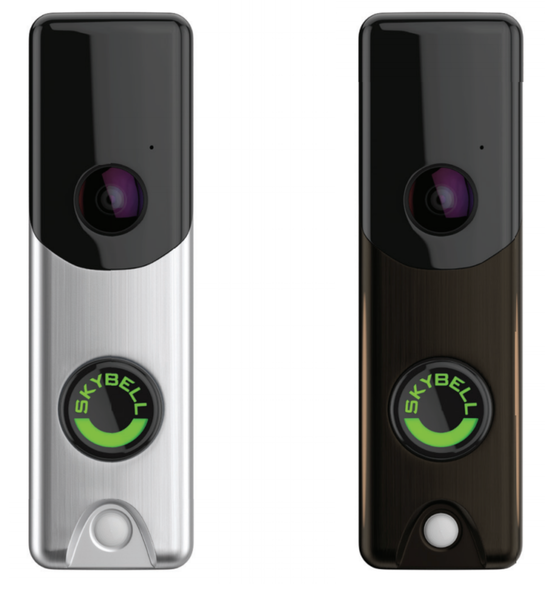
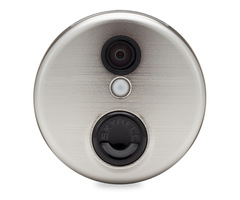
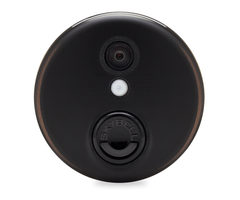
We have some exciting new products from Alarm.com now available on our site. The main highlight is the Alarm.com Slim Line II Doorbell Camera from SkyBell. We also have some great new accessories for the existing Alarm.com ADC-VB770 Doorbell Camera. These products are available now!


The SkyBell ADC-VDB105X (Satin Nickel) and SkyBell ADC-VDB106X (Bronze) refer to the new versions of the ADC-VB105 and ADC-VDB106. You may recall these as the "Slim Line" versions of the Alarm.com SkyBell Video Doorbells. The new models retain all of the existing features, while also offering some general improvements. While officially being titled as "SkyBell" devices, they are more commonly referred to as the Alarm.com Slim Line II Video Doorbell Cameras.

Some of the highlights for the Alarm.com Slim Line II Doorbell Cameras include their adjustable 720p recording resolution, their 1.3 MP full-color video camera, two-way voice functionality, WIFI connectivity, a 170° horizontal and 110° vertical field of view (FoV), IR night vision, an IPX4 weather-resistant rating, adjustable PIR sensitivity, real-time alerts, automation rules, an integrated battery heater for seamless operation in cold weather, doorbell-triggered and motion-triggered clips, and much more.

Since these are SkyBell devices, you can technically add one (1) of these devices to your Alarm.com account, even if you do not have true video monitoring service. If you do this, then you will be restricted to only one (1) SkyBell Doorbell Camera, along with 400 monthly clips and 400 total clips. This is a great option if you have an Alarm Grid Gold Plan, and you don't want to upgrade all the way to an Alarm Grid Platinum Plan for true video surveillance. More information can be found in this FAQ covering Alarm.com Clip Limits. Please note that if you want to use additional video devices or increase your clip limits, then you will need to upgrade to a full video monitoring plan. If you use one of these devices with a true video monitoring plan, such as an Alarm Grid Platinum Plan, then the doorbell will just count toward your regular Alarm.com Camera limits, as well as your Alarm.com Clip limits. Also keep in mind that since these are Alarm.com SkyBell models, they should not be used with any interactive platform outside of Alarm.com. They should also not be used with the native SkyBell App. Attempting to use one of these devices with the SkyBell App may make the camera completely incompatible with Alarm.com.

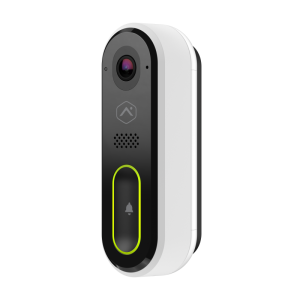
In addition to the Alarm.com Slim Line II Video Doorbell Cameras, we are also now offering several new doorbell camera accessories. These accessories are not for the new Alarm.com Slim Line II Doorbell Camera, but rather they are for the existing Alarm.com ADC-VDB770 Doorbell Camera. This is the "higher-end" doorbell camera that we began offering late last year. It represents the ultimate option for Alarm.com users who are looking for the very best doorbell camera available.

The new accessories for the ADC-VDB770 include:

  • ADC-VDBA-COVER - Touchless Doorbell Cover that lets guests know to not touch the video doorbell. Used in conjunction with the Video Doorbell Mat.
  • ADC-VDBA-MAT - Video Doorbell Mat that lets guests know to activate the camera by standing on the mat. Used in conjunction with the Touchless Doorbell Cover.
  • ADC-VDBA-PSU-PD - Video Doorbell Wall Power Supply Kit that is used if there is no existing chime circuit, or if the chime circuit is incompatible. Can be used with or without a power module. Device is rated at 16 Volts DC, 1.25 Amps, or 20 Watts.
  • ADC-VDBA-TC - Temperature Collar Accessory that allows the doorbell camera to be safely used in temperatures as low a -40°F. Can be used with or without the Wall Mounting Plate.
  • ADC-VDBA-WP - Wall Mounting Plate that hides blemishes such as missing paint or screw holes. Goes in-between the wall and the doorbell camera. Dimensions are 5.43"L by 3.43"W.

If you have any questions about the Alarm.com Slim Line II Doorbell Camera or any of the new accessories for the ADC-VDB770, please email our support team at support@alarmgrid.com. That is also a good email to use if you are interested in starting new alarm monitoring service with Alarm Grid. We're here to answer your emails from 9am to 8pm ET M-F. We look forward to hearing from you!
Tags: , , , , , , , , , , , , , , , ,

Comments


Posted By

DSC PowerSeries NEO users should be pleased to learn that a new firmware update is available for their system communicators. Firmware Upgrade Version 191a offers improvements for Over-The-Air (OTA) connectivity and stability improvements. It also corrects some minor issues that were present.

Firmware Upgrade Version 191a is applicable to both DSC PowerSeries NEO and DSC PowerSeries PRO Systems. For DSC PowerSeries NEO users, the firmware update is technically optional, but still recommended. In order to receive the update, you must have it pushed down manually to your alarm panel from the Alarm.com servers. Assuming that you have internet connectivity set up for your PowerSeries NEO Alarm System, you should not incur any fees as part of the updating process.

Alarm Grid monitored customers with PowerSeries NEO Security Systems can request the update by emailing support@alarmgrid.com. We will work on pushing the update down to your panel at our earliest convenience upon receiving your request. This is also a great email to use if you have any further questions about alarm systems, or if you are interested in starting new monitoring service with Alarm Grid. Remember that we are here to check your emails from 9am to 8pm ET M-F. We look forward to hearing from you!

Tags: , , , , , , , , , , , , , , , , , , , , , , , , , , , , ,

Comments


Posted By

We have learned that Alarm.com is planning to discontinue their popular residential streaming video recorder device, the Alarm.com ADC-SVR122. This device is used to store security camera footage so that it can be accessed locally at the ADC-SVR122 or remotely through the Alarm.com servers.


For now, Alarm.com recommends using their Onboard Recording feature as an alternative to using a dedicated streaming video recorder (SVR) device. The Alarm.com Onboard Recording feature allows you to store encrypted 24/7 recording footage locally onto a MicroSD card. It requires a compatible Alarm.com Camera, which includes the ADC-V515, ADC-V523, and ADC-V723. You may recall that these three (3) cameras also represent our current Top Picks for Alarm.com Security Cameras. You will also need the feature added to your Alarm.com account, as well as a compatible SD card. So make sure to your alarm monitoring company enables this feature. The SD card can be 256 GB maximum, and we have some compatible options listed below.

  • Micron Industrial Memory Cards
  • SanDisk High Endurance
  • WD Purple Micro SD Cards

Alarm.com will also still offer the Alarm.com ADC-CSVR126 Streaming Video Recorder. This product, while being built to handle the needs of a commercial location, accomplishes essentially the same thing as the ADC-SVR122. It supports up to sixteen (16) total cameras, and it comes in 2 TB and 12 TB storage options, with the possibility of being upgradable to 16 TB storage. While this is honestly a bit of overkill for most residential applications, it does represent an option if you require a streaming video recorder for your Alarm.com Cameras.

For now, the Alarm.com ADC-SVR122 will remain available for purchase in the 500 GB storage variant only while supplies last. Once we run out of stock, it will no longer be available. If you are an Alarm Grid monitored customer wanting to set up the Onboard Recording feature, or if you are interested in starting new alarm monitoring service with Alarm Grid, send us an email at support@alarmgrid.com. We are here to receive your emails from 9am to 8pm ET M-F. We look forward to hearing from you!

Tags: , , , , , , , , , , ,

Comments


Posted By

For Alarm.com Cameras, it can be a bit overwhelming with all of the great options available. Today, we're going to keep things simple by checking out the three (3) cameras that provide the best features and ease of use for the typical homeowner. Here are the top picks for Alarm.com Cameras.


The cameras we are checking out today are all built for residential use. However, you should have no problem using them to monitor a small business if needed. These cameras are differentiated from the Alarm.com Commercial Cameras because they do not have an extra C in the SKU, or name. Any Alarm.com Camera with a SKU of ADC-V###, with the ### representing a three digit number is a residential camera. They should not be confused with the cameras with SKUs in the ADC-VC### format. That extra C after the V indicates Commercial. And while the Alarm.com Commercial Cameras are fantastic, and they can certainly be used in the home, most residential users will have an easier time getting started with the corresponding residential cameras.

As far as what makes the residential cameras different from the commercial cameras, there is one feature that really stands out. The Alarm.com Residential Cameras are WIFI cameras that connect wirelessly to the local WIFI you already have set up in your home. But the Alarm.com Commercial Cameras are typically Power Over Ethernet (PoE). A PoE camera will not connect wirelessly to WIFI. Instead, you will need to run an ethernet cable to the camera, which will supply both internet and electrical power. A non-PoE WIFI camera will instead have its own plug-in transformer that you can just plug into any outlet. While many users appreciate the ability to set up a camera with PoE, most homeowners will have an easier time just connecting the camera to WIFI and finding a nearby outlet to use. Therefore, when it comes to residential cameras, WIFI is considered supreme.

For any Alarm.com Camera, you will need a monitoring plan that includes video surveillance to start using them. If you already have a security system that uses Alarm.com, such as a Qolsys IQ Panel 2 Plus or a 2GIG GC3e, then you will likely just need to upgrade your existing monitoring plan. If you are new to alarm monitoring and plan on setting up a security system as well, then the Alarm Grid Platinum Plan is a great option that combines top-of-the-line alarm monitoring service, including central station coverage, with the video surveillance features that you and your family need. Or if you don't have a security system, and you just want to use Alarm.com Cameras, then you may explore the Alarm Grid Video Only Plan, which offers affordable video surveillance for users who just want that service.

Of course, for any video monitoring plan, you will need some cameras, so let's get into the three Alarm.com Cameras we intend on checking out today!

First up we have the Alarm.com ADC-V523, which is honestly the go-to Alarm.com Residential Camera for standard, indoor use. It is the gold-standard of Alarm.com Cameras, offering all of the features and performance you could possibly want. It has a premium image sensor (1/2.7” CMOS, 2.1 MP, 1920 x 1080, HDR) and camera lens (3.0mm, F2.0) to capture activity around your home in true 1080p quality, with High Dynamic Range (HDR). Also included is IR Night Vision, which effectively captures video at night or in an otherwise dark setting from up to ~15 feet away. And a viewing angle of 117° ensures that no action is missed, providing a wider coverage area and field of view (FoV) for when you need it most. Simply put, if you need an indoor camera, and you don't want to sacrifice anything in terms of quality, then the Alarm.com ADC-V523 is for you.


But if you don't need quite all the bells and whistles, then you might instead consider the new budget camera from Alarm.com, presenting the Alarm.com ADC-V515. This camera offers all of the same features as the premium ADC-V523, with a slightly toned down image. You still get the 1080p quality and High Dynamic Range (HDR), but the image sensor is a bit reduced (1/3", 2.12 MP, 1920x1080, HDR), and the lens is just a bit smaller (3.19 mm, F2.2). Also viewing angle FoV is 7-degrees reduced at 110°. But otherwise, this is pretty much the same camera. You still get the ~15 Feet IR Night Vision and all of the other great features. Quite frankly, most users will not notice any bit of difference with this camera. If you want an outstanding camera at the best price Alarm.com can offer, then the Alarm.com ADC-V515 is for you.

Last but not least is Alarm.com's best offering for a residential outdoor camera, the Alarm.com ADC-V723. This premium outdoor model brings the same features and performance as the ADC-V523, but presents it in a package that can withstand the harshness of an outdoor environment. Returning is the same fantastic image sensor (1/2.7” CMOS, 2.1 MP, 1920 x 1080, HDR), camera lens (3.0mm, F2.0), and wide viewing angle FoV (117°), but there are two (2) things that separate this camera. First, the ADC-V723 has an amped up IR Night Vision range of ~40 feet, compared with just ~15 feet of the indoor model. This is important if you have a big backyard and need to capture night prowlers in the act. And the second change, making the camera perfect for ourdoor use is the ingress protection, IP66. You can trust this camera to work perfectly even with exposure to rain, snow, wind, heavy sunlight, and heavy dust. It will keep on recording strong and monitoring your home for suspicious activity. If you want a tremendous 1080p HDR outdoor camera, then look no further than the Alarm.com ADC-V723.


If you have any questions about the Alarm.com Cameras we presented here today, or any of the other cameras offered from Alarm.com, please send an email to suppor@alarmgrid.com. We are happy to help you find the perfect cameras to use around your home. Our hours for checking email run from 9am to 8pm ET M-F, so keep that in mind when contacting our support team. We look forward to hearing from you!

Tags: , , , , , , , , , ,

Comments


Posted By

Important Update: Alarm Grid has opted out of the two-factor authentication (2FA) requirement for Alarm.com. The post below was written before Alarm Grid opted out, and it was believed that 2FA would soon be required for all Alarm Grid monitored customers who receive access to Alarm.com.

Alarm Grid has received notice from Alarm.com that two-factor authentication (2FA) will soon be required for all Alarm.com users. Alarm.com is making this requirement to protect user accounts against unauthorized access. Users can set up 2FA for Alarm.com through email or text message.


At the time of this writing in late January 2021, 2FA for Alarm.com is optional, but it is recommended for keeping accounts as secure as possible. However, starting on Monday, February 15, 2021, any user who has not yet set up 2FA will be required to do so upon logging into their Alarm.com account. According to Alarm.com, the goal is to have every Alarm.com user set up with 2FA by Spring of this year.

When setting up 2FA for Alarm.com, you can choose to have codes sent via text message or email. Once the feature has been set up, you will need to perform 2FA upon logging into Alarm.com on an unsaved device. After you provide your ADC username and password, Alarm.com will send you a secret code via text or email. You must provide this secret code to verify your identity. Only then will you gain access to your Alarm.com account. Alarm.com will then allow your to "save" that device so that you don't need to perform 2FA the next time you use that device.

For most users, this will only mean performing 2FA when logging into Alarm.com through the mobile app on a new phone or through the Alarm.com website after clearing cookies. It's good that Alarm.com allows you to "save" trusted devices, as it would be very inconvenient to be required to perform 2FA every single time you go to access the Alarm.com service. However, it's a nice extra layer of protection for those times if you ever access Alarm.com through a public computer or some other computer that you don't normally use. While we are a bit surprised to see Alarm.com requiring 2FA for every user, we understand their rationale in wanting to keep accounts as secure as possible. Remember, anyone who is able to access your Alarm.com account and disarm your security system basically has full access to your property. Therefore, any extra protection is appreciated!

You can enable 2FA for your Alarm.com account at any time through the website. Simply login to your account through the website, and then select the Settings option on the left-hand side of the screen. From there, choose Login Information, and then Two-Factor Authentication. Then choose to set up the feature through text or email by following the on-screen prompts.

If you have any extra questions, or if you are interested in starting new monitoring service for use with Alarm.com, please email our team at support@alarmgrid.com. We're here to check your emails and provide support from 9am to 8pm ET M-F. We look forward to hearing from you and helping you get started with Alarm.com.

Tags: , , , ,

Comments


Posted By

A recent article indicated that 52 publicly traded companies dealing in smart home automation experienced an average stock price increase of 34.5% in 2020. This is yet another indication that the smart home industry is stronger than ever, as expectations are being set high for 2021.

Of the 52 publicly traded smart home automation companies followed from January 2020 to January 2021, 38 saw their stock price increase, compared with only 14 that experienced a decline in stock price across the same time frame. For comparison, a similar study of 52 smart home automation companies from the year prior reported that only 8 companies saw stock price declines in 2019, while the other 44 companies had their stock prices increase. Because of this, we can't say that the smart home industry was stronger in 2020 compared with 2019. But 2020 was still a fairly successful year. And as the economy looks to recover following the COVID-19 pandemic, we expect that things will only get better in 2021.

One company in the list that had a particularly strong showing was Alarm.com. They enjoyed a fantastic 141% stock price increase, as their price of $42.97 in January 2020 was up to $103.45 in January 2021. Johnson Controls, the owner of Qolsys and DSC, experienced a more modest gain of 14%, as their stock price rose from $40.71 in January 2020, to $46.59 in January 2021. The same can be said for Silicon Labs, the operator of the Z-Wave Alliance. Their January 2020 stock price was $115.98, and it rose to a January 2021 stock price of $127.34, for a nice 10% increase.

Alarm Grid was happy to see some of the companies and manufacturers we work with have a successful 2020 year, despite all of the global challenges involved. If you are interested in starting alarm monitoring service with Alarm Grid so that you can take full advantage of great equipment from companies like Alarm.com, Johnson Controls, and Silicon Labs, please feel free to email us at support@alarmgrid.com for more information. We're here to check your emails from 9am to 8pm ET M-F. We look forward to hearing from you!

Tags: , , , , , ,

Comments


Posted By

Alarm.com has announced that some of their most popular security cameras will soon be receiving important over-the-air (OTA) firmware updates. The models receiving firmware updates include the ADC-V523 Indoor Camera, the ADC-V723 Outdoor Camera, and the ADC-VDB770 Doorbell Camera.


End users will not need to take any special action to receive the automatic firmware updates. The updates will be pushed down to the cameras from the Alarm.com servers throughout the coming weeks. As long as the device is online and connected with Alarm.com, then it should receive the update successfully.

The ADC-V523 Indoor Camera and the ADC-V723 Outdoor Camera are both receiving Firmware Upgrade Version 0.6.1.151. The update will provide support for the recently released Onboard Recording Schedules Feature. Users can also expect general stability fixes and device performance improvements.

The Alarm.com ADC-VDB770 is receiving Firmware Upgrade Version 02088. As the Alarm.com Doorbell Camera was only released a couple of months ago, this is believed to be the first significant firmware update for the device. The update will primarily focus on improving WIFI connectivity and overall network stability for the doorbell camera. Users should notice fewer streaming disruptions as a result.

If you are an Alarm Grid monitored customer with questions about these upcoming firmware updates, or if you are interested in starting new alarm monitoring service so that you can use Alarm.com Security Cameras, then please email our support technicians and alarm system planners at support@alarm.com. We check email and respond to inquiries Monday thru Friday from 9am to 8pm ET. We look forward to hearing from you!

Tags: , , , , , , , , , , , , , , , ,

Comments


Posted By

Alarm.com has a new security camera available, the ADC-V515. This is an entry-level camera for use in homes and small businesses. It supports virtually all of the same great features as the higher-end cameras from Alarm.com. The camera is available for purchase on the Alarm Grid website.


The Alarm.com ADC-V515 is set to replace the existing Alarm.com ADC-V522IR, which will remain available until the existing stock is exhausted. What's great about the new ADC-V515 is that it offers nearly all of the same excellent features and strong performance of earlier Alarm.com Camera models, but at a lower price point. We recommend this camera for anyone looking to set up video monitoring inside their home or business on a budget.

For an entry-level camera, the ADC-V515 certain boasts some impressive specifications. It offers full 1080p recording and High Dynamic Range (HDR) functionality for more luminous video captures. Its viewing angle of 110° is only 7° less than the higher-end ADC-V523. You can also effectively use the ADC-V515 at nighttime or in a dark environment thanks to its IR Night Vision feature, which works from up to 15 feet away. You will also love the ability to adjust images through Flip, Brightness, Contrast, Saturation, Sharpness, and Exposure.

One restriction with the ADC-V515 is that it can only be used with WIFI connectivity. The camera does not support wired ethernet connectivity, and it cannot be set up with Power over Ethernet (PoE). This is important to keep in mind if you are accustomed to wiring your security cameras for PoE. Instead, the ADC-V515 gets its power from a plug-in transformer, which comes included. Additionally, you can only use 2.4 GHz WIFI networks with the camera. It does not support 5 GHz WIFI networks.

Remember that the ADC-V515 is for indoor use only. If you need an outdoor camera, then you might consider the Alarm.com ADC-V723 instead. Also keep in mind that you will need Alarm.com Video Monitoring service to use the ADC-V515 or any other mainline Alarm.com Camera. You can get Alarm.com Video Monitoring service with a Platinum Plan from Alarm Grid. Both our Platinum and Self-Platinum Plans are viable options. Click here to learn more about our monitoring plans.

If you are interested in starting new monitoring service, upgrading your existing service, or if you just want to learn more about the ADC-V515, then please email our support and planner teams at support@alarmgrid.com. We're here to help you from 9am to 8pm ET M-F. We look forward to hearing from you!

Tags: , , , , , ,

Comments